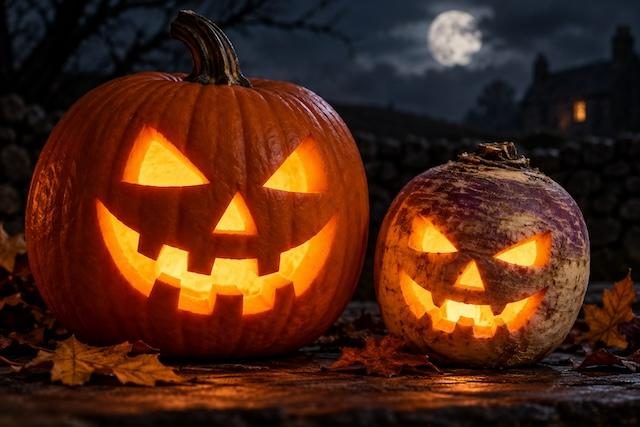
When families across the United States gather to carve pumpkins each October, they are continuing a tradition that began far from the American South. The original jack‑o‑lantern was not a pumpkin at all, but a turnip, and its story is rooted in Irish folklore.
The Legend of Stingy Jack
According to centuries‑old Irish tales, a crafty but unpleasant man named Stingy Jack managed to trick the devil twice. In the first encounter, Jack persuaded the devil to promise never to claim his soul. Later, when Jack died, heaven would not admit him and the devil, bound by his promise, refused to take him either. Instead, the devil tossed Jack a burning ember to light his endless wandering.
Jack placed the ember inside a hollowed‑out turnip, creating a makeshift lantern. Travelers began referring to the wandering light as “Jack of the Lantern,” which eventually shortened to jack‑o‑lantern.
From Turnips to Pumpkins
In Ireland and Scotland, people carved frightening faces into turnips and other root vegetables, inserting candles to frighten away wandering spirits during Samhain, the Celtic festival that marked the transition into winter. When Irish immigrants arrived in America in the 19th century, they found a vegetable that was easier to carve.
Pumpkins, native to North America, were larger, softer, and practically begged for a face. The American pumpkin quickly replaced the turnip as the preferred Halloween decoration, and the tradition spread throughout the country.
Why the Tradition Endures
Today, carving pumpkins is a beloved family activity that brings together parents and children, reinforcing the value of shared traditions and creative expression. The simple act of scooping out the orange flesh and carving a grin or grimace connects modern families to an ancient custom that once helped people ward off spirits.
Even as the pumpkin has become the standard, the original turnip story remains a fascinating footnote. It reminds us that many of our favorite holidays have deep cultural roots that cross oceans and centuries.
Fun Facts for Your Next Halloween
- Turnips were the original lantern material in Ireland and Scotland.
- The term “jack‑o‑lantern” comes from “Jack of the Lantern,” the name given to Stingy Jack’s glowing turnip.
- Pumpkins were adopted in the United States because they are larger and softer than turnips, making them easier to carve.
- Carving pumpkins is a tradition that encourages family bonding and creative storytelling.
So the next time you line up a row of glowing pumpkins on your porch, remember the Irish turnip that started it all. Honoring the original tradition adds a touch of history to your holiday celebration.
Original reporting: Knox TN Today — read the source article.