In response to a wave of unrest that left dozens of city halls and countless storefronts damaged, French Prime Minister Sébastien Lecornu announced on Monday that prefects will be directed to impose “very limited” and “localized” curfews in affected municipalities. The move aims to curb further rioting and looting after Saturday’s violent protests against rising living costs and school conditions.
Government rationale and immediate actions
Lecornu told reporters that, despite “scenes of severe violence and extensive property damage,” no fatalities occurred—a fact he called “a miracle.” He emphasized that the curfew orders will be narrowly targeted, with specific neighborhoods to be identified later in the day.
Interior Minister Laurent Nuñez, who offered his resignation on Sunday, was asked by President Emmanuel Macron to remain in his post to oversee the emergency response. Macron’s office said the president rejected Nuñez’s resignation “given the need for continued command of law enforcement in the current context.” The president also instructed Nuñez to ensure full transparency about the intelligence and planning failures that preceded the unrest and to accelerate the deployment of new policing tactics.
Details of the unrest
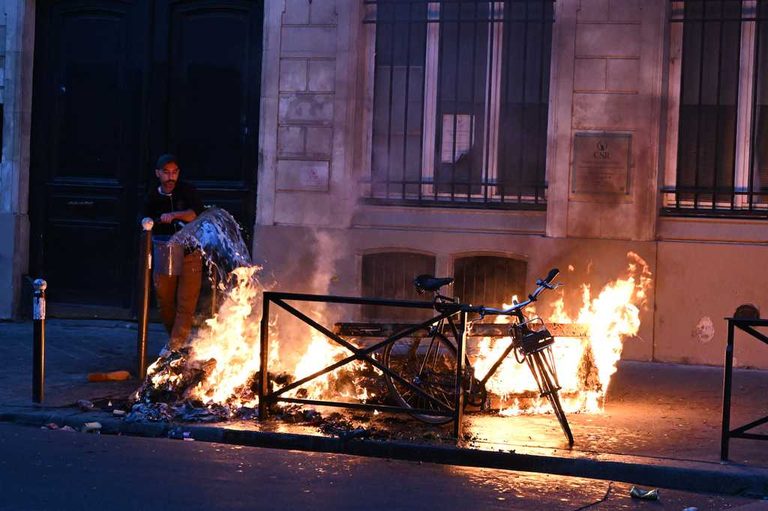
During the weekend, groups set fire to trash bins, bicycles and other objects on the streets of Paris, Lyon, Marseille and several other cities. Protesters looted businesses, and at least 2,400 people were arrested nationwide. Nuñez described the perpetrators as “hordes of troublemakers and looters” and blamed “far‑left activists” for inciting the violence. He acknowledged that police strategy must adapt to “extremely mobile groups” and admitted that authorities had “lost control” in some major cities.
One of the most dramatic incidents occurred in Limoges, where flames engulfed the 19th‑century City Hall, causing the roof to collapse. In Marseille, the prefect issued a ban on any protest or gathering from noon to 8 p.m. on Monday.
Political context and future steps
The unrest follows weeks of nationwide demonstrations over the cost of living and deteriorating conditions in schools. While the government has framed the curfew as a temporary, targeted measure, critics warn that such restrictions could infringe on civil liberties if applied too broadly. The administration, however, argues that the curfew is essential to protect public safety and prevent further damage to private property.
President Macron has called for “new policing tactics on the ground as quickly as possible” and stressed the importance of restoring order while respecting the rights of peaceful demonstrators. The government plans to release detailed maps of the curfew zones later Monday, allowing residents and business owners to understand the specific restrictions that will apply in their neighborhoods.
What this means for French citizens
For families and business owners, the localized curfew could mean limited hours of operation in affected districts, with law‑enforcement presence heightened during the imposed hours. Community leaders are urged to cooperate with authorities and to help disseminate accurate information to avoid confusion.
As the situation develops, the French government pledges continued transparency and a swift review of policing tactics to ensure that future protests can be managed without resorting to widespread curfews.
Original reporting: WPBF (Treasure Coast / Hearst) — read the source article.