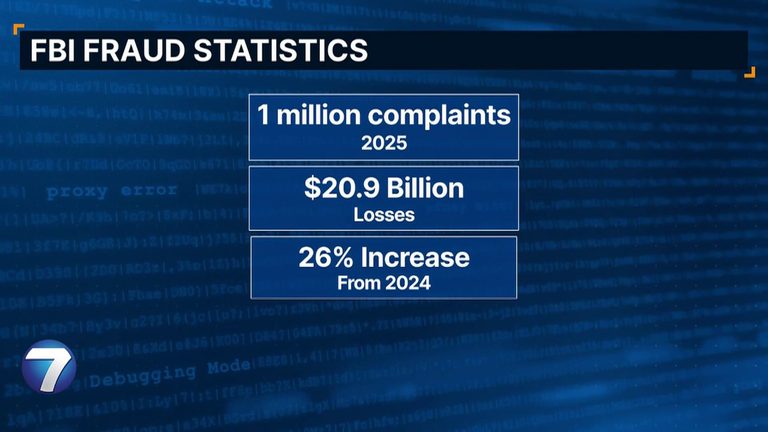
National fraud investigators say criminal groups are increasingly targeting businesses with highly sophisticated social‑engineering attacks. The FBI reports that over $3 billion was stolen in business‑email compromise schemes last year, a figure that underscores the urgency for local leaders to strengthen their defenses.
Local leaders gather to share protection strategies
At a recent business‑security forum, Kris Edwards, head of fraud prevention at Fifth Third Bank, highlighted the growing danger. “Fraudsters have become very sophisticated in their approaches and are increasingly going after our commercial clients,” Edwards told the assembled audience of business owners, church administrators and community leaders.
Edwards explained that criminals are drawn to businesses because they handle larger balances and can move money quickly. “They have larger balances, they can move more money, and they’re using social engineering in order to do so,” he said.
How scammers impersonate trusted parties
Scammers often pose as bank agents, customers or even internal staff members, leveraging the trust associated with those identities. Edwards noted that many attackers harvest employee names from social‑media platforms such as LinkedIn, then use that information to craft convincing emails that appear to come from a colleague or a vendor.
“They’re actually using social media, LinkedIn, to get real employee names from my team,” Edwards said. “When these criminals scam businesses, it can also impact their customers and community too.” He emphasized that the fallout extends beyond corporate balance sheets, affecting local churches and small enterprises that serve the community.
Education and vigilance are the best defenses
According to Edwards, the most effective antidote is education. “All we can do is get education out there and make sure that people are being vigilant with their financial information,” he urged. He recommended a simple checklist for employees:
- Never click suspicious links or attachments.
- Verify the identity of anyone requesting financial transactions, especially if the request comes via email.
- Confirm the sender’s email address and look for subtle misspellings or unusual domains.
- Report any unexpected or out‑of‑the‑ordinary requests to the finance or IT department before acting.
Fifth Third’s fraud‑prevention team also stresses the importance of multi‑factor authentication and regularly updating passwords to reduce the risk of unauthorized access.
Community impact and next steps
Local officials and business groups plan to host additional workshops throughout the state, focusing on practical steps that small‑business owners and nonprofit leaders can take. By spreading awareness and fostering a culture of caution, the community hopes to curb the tide of fraud that has already cost billions nationwide.
Edwards concluded with a reminder that vigilance is a shared responsibility. “I keep reminding people that these aren’t just large corporate clients. These are your churches and your local small businesses,” he said. “When we all stay alert, we protect not only our own bottom line but the entire community’s economic health.”
Original reporting: WHIO-TV Dayton (local) — read the source article.