There’s a guy at Franklin’s Antique Mall who comes in every Saturday at opening and walks the whole place clockwise, every aisle, without buying anything. Then he circles back and buys something. He’s been doing it for eleven years. Nobody thinks this is strange. That’s probably the best way to describe the culture of the place.
Franklin’s sits on South MacArthur Boulevard, in a stretch of Springfield that doesn’t get much tourist traffic — which suits its regulars just fine. It’s a large, low-slung building that holds somewhere north of fifty dealers, their inventory stacked and sorted to varying degrees of intentionality. Some booths are meticulous; others look like the contents of a basement were relocated directly and without editorial comment. Both types yield results.
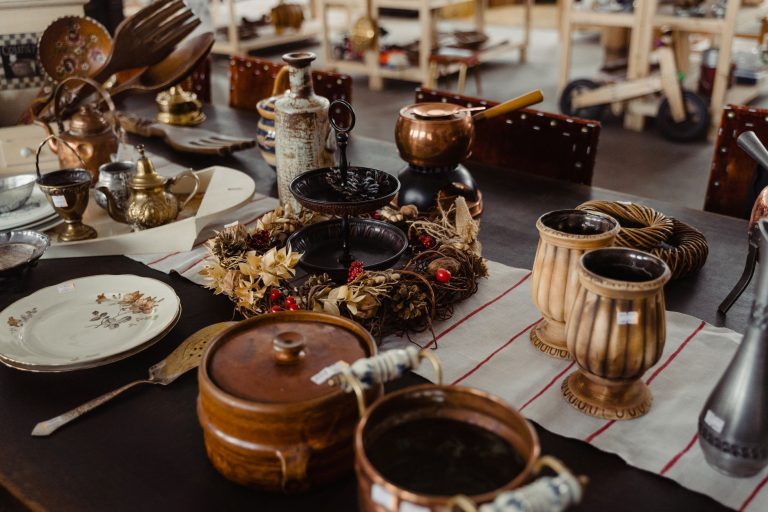
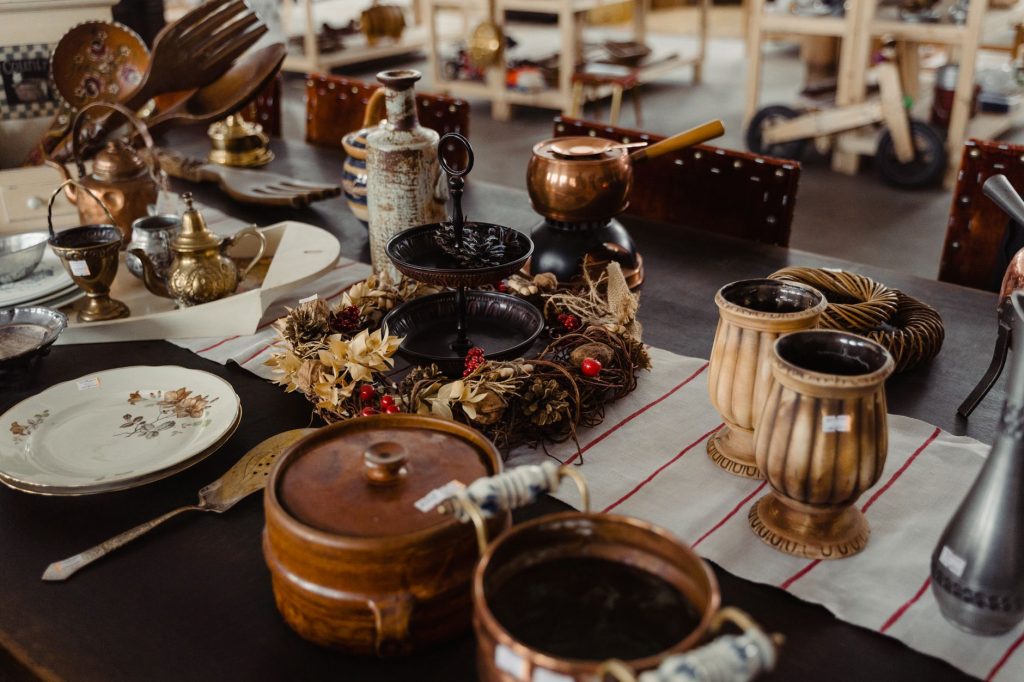
What Franklin’s does better than most multi-dealer antique setups is variety without chaos. You can spend an hour in there and move through mid-century furniture, Depression glass, pre-war advertising tins, old Illinois license plates, vintage clothing, cast iron, cameras, political buttons, religious ephemera, and a surprising quantity of things no one has yet named. The pricing tends toward reasonable — not rock-bottom, but not inflated by the assumption that everyone shopping is a dealer from out of town trying to flip something. Local buyers get a fair shake here.
The front section rotates more frequently and skews toward the decorative — items that look good in a farmhouse kitchen or a recently renovated bungalow, whatever the market is currently calling “curated.” Move toward the back and the real digging begins. That’s where you’re more likely to find a box of unsorted postcards, a stack of 78s, or a piece of hardware that you can’t immediately identify but strongly feel you need.
Pricing tags list the dealer number, so if you want to negotiate — and many dealers are open to it, especially on larger pieces — you can ask the staff to pass along a question. It’s not a flea market, so don’t walk in expecting to knock 40 percent off a tagged lamp, but there’s usually room on furniture and anything that’s been sitting a while.
Saturday mornings are busiest; weekday afternoons are when you can actually think. If you’re after furniture and need help loading, calling ahead is smart — the staff is accommodating but not a moving crew, and the parking lot does the heavy lifting in terms of access. Cash is always appreciated; cards are accepted.
What keeps Franklin’s worth returning to is the dealer turnover. Booths change hands, estates come in, collections get broken up. The place doesn’t stay the same, which means neither does your luck. Some trips yield nothing. Some trips you find a 1930s Illinois farm bureau map in a folder of loose papers for four dollars. That’s the deal you make with this kind of place — it asks for patience and occasionally pays off embarrassingly well.
It’s open seven days. Bring comfortable shoes and a rough sense of what you’re looking for, or no sense at all. Both approaches work here.