France is bracing for a third consecutive weekend of large‑scale demonstrations focused on rising living costs and education. The interior ministry has deployed roughly 70,000 police officers and gendarmes, and Paris officials have rerouted the main march to the capital’s outer ring, stretching from Porte de Bagnolet to Porte de Charenton.
Restrictions and curfews in Paris
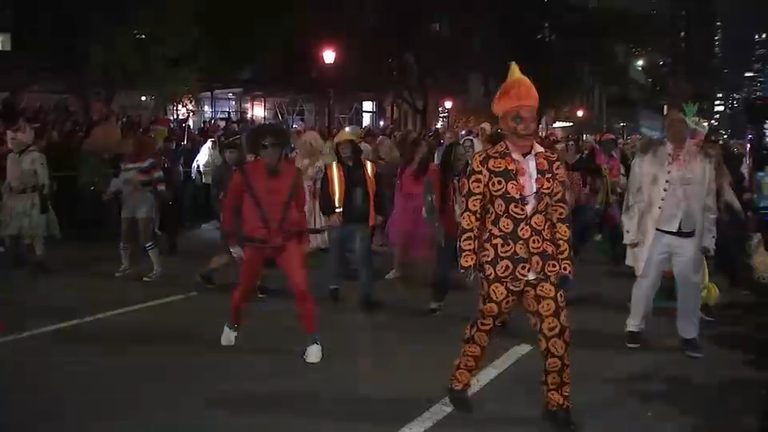
Interior Minister Laurent Nuñez warned of a “very high risk” of disorder, especially after dark on Halloween. Police barred the traditional union and “yellow‑vest” routes through the city centre, directing all participants onto a single boulevard corridor. Unions and student groups challenged the limits in court but were unsuccessful.
President Emmanuel Macron reiterated that keeping protests out of central districts is intended to protect shops and businesses. Police also locked down Place de la République and Les Halles from 11 p.m. to 6 a.m. on Saturday and Sunday after those sites suffered looting on Oct. 17. Unaccompanied minors face a separate 9 p.m. curfew along the Champs‑Élysées, a measure a Paris court recently suspended as an unlawful infringement on freedom of movement.
Scale of the movement
Authorities counted about 550,000 demonstrators nationwide on Oct. 17, when rioters looted hundreds of shops, and roughly 410,000 on Saturday, when most rallies remained peaceful but police made more than 1,300 arrests.
The protests began with high‑school students demanding better school conditions and quickly broadened to include anger over the cost of living, housing and basic necessities.
Parallel actions across Europe
In Germany, a youth initiative called “Gen Z regelt” (roughly “Gen Z’s got this”) called for rallies in about 30 cities, citing education, health, climate protection, affordable living and opposition to any return of military conscription. Organizers claim over 140,000 people have signed up online. Berlin police expected around 10,000 participants at the Brandenburg Gate, and some shops on the Kurfürstendamm boulevard boarded their windows, though officials said they had no specific threat intelligence.
In Barcelona, Catalan police prepared to raise their alert level after an anonymous TikTok network named Blocus urged new gatherings. Rioting there last Saturday resulted in roughly 130 arrests, most of them minors.
Italian police remain on alert after clashes in Milan, Turin and Bologna, while TikTok‑driven calls for protest have also surfaced in Belgium, the Netherlands, Austria, Switzerland and Portugal.
Legal challenges and public safety
A Paris court on Wednesday suspended an earlier curfew on minors, deeming it a serious and illegal infringement of freedom of movement. The ruling underscores the tension between public‑order concerns and civil liberties as the protests continue.
Despite the heightened police presence, many of the demonstrations this weekend have been largely peaceful, with authorities emphasizing the importance of protecting both public safety and the right to protest.
Original reporting: NBC4 Los Angeles — read the source article.