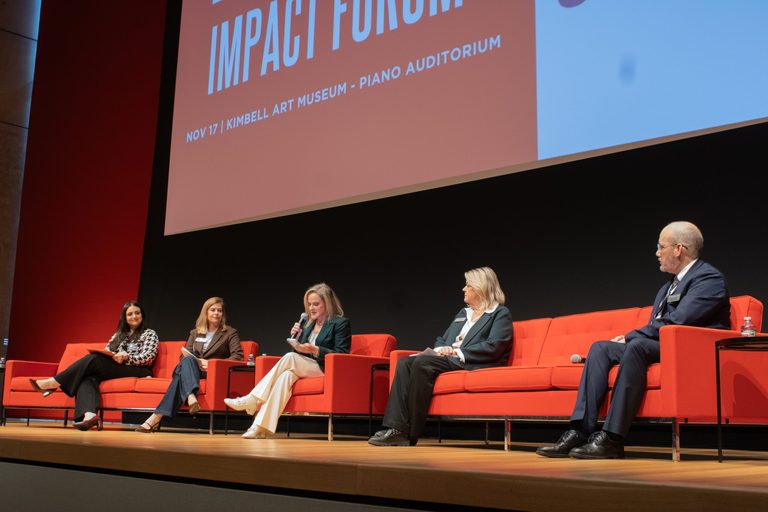
Fort Worth nonprofit leaders gathered at the Chamber of Commerce’s 2026 Economic Impact Forum to demonstrate how their organizations bolster the city’s economy. Speakers cited concrete figures that show every dollar spent by a nonprofit ripples through the community, creating additional value and supporting families.
Key economic findings
Carol Klocek, CEO of Center for Transforming Lives, noted that each dollar funneled through a nonprofit generates an extra 43 cents in economic activity. She emphasized that these ripple effects extend beyond direct services, helping to stabilize families and maintain a vital safety net.
Toby Owen, CEO of Presbyterian Night Shelter, described the UpSpire program, which employs people experiencing housing instability in jobs ranging from trash cleanup to woodworking. The program has generated close to $10 million in gross revenue, and a Mathematica Policy Forum study cited by Owen shows that every dollar spent by a social enterprise invests $2.23 back into the local economy.
Julie Butner, president and CEO of the Tarrant Area Food Bank, reported that the food bank spends $6.8 million annually purchasing food from local ranchers and producers, directly supporting the agricultural sector.
Susan Gulig, president of the Humane Society of North Texas, highlighted that 5,600 pet adoptions in 2025 translated into roughly $5.6 million of local spending, based on an average annual pet‑owner expense of $1,000.
Nadine Richardson, chief of staff at Catholic Charities Fort Worth, shared internal calculations indicating that for every dollar spent on a program, the return can be as high as $5, underscoring the multiplier effect of charitable services.
Corporate giving and volunteerism
Adam Powell, CEO of United Way of Tarrant County, and Alcon vice president of social impact and sustainability, Charles Herget, discussed how corporate philanthropy can reinforce employee engagement and productivity. Alcon’s Alcon Foundation and Alcon Cares initiatives fund eyecare solutions and conduct life‑changing eye surgeries abroad, reflecting a culture of giving that Alcon describes as “baked into the fabric” of the company.
Herget argued that meaningful volunteer projects—beyond simple trash pickups—keep workers motivated, reduce turnover and foster a sense of purpose. He advised companies to use platforms that streamline giving while ensuring volunteers are involved in substantial, impact‑driven work.
Why the impact matters
Panelists agreed that the economic contributions of nonprofits help offset broader financial pressures on Fort Worth residents. By creating jobs, supporting local suppliers and generating tax‑able activity, the sector acts as a catalyst for growth and resilience.
“Our nonprofits are essential partners in building a thriving community,” said Butner. “They not only meet immediate needs but also drive economic vitality that benefits every Fort Worth citizen.”
The forum underscored the importance of continued collaboration between nonprofits, businesses and government to sustain this momentum and ensure that the charitable sector remains a cornerstone of the city’s economic health.
Original reporting: Fort Worth Report — read the source article.