The cottonwoods along the North Platte drop their cotton in late May, and for about two weeks it looks like someone left a dryer running with the door open. That’s actually the best time to walk the western stretch of Casper’s Platte River trail system — not because it’s prettier than any other season, but because you’ll have the whole thing mostly to yourself, and the light through those trees at seven in the morning is genuinely worth getting up for.
Most people who use this section start at the Fort Caspar trailhead on North Poplar Street, park in the lot next to the museum, and head east toward the footbridges and the busier stretches downtown. Go the other direction instead. Head west along the south bank and the crowds thin out inside of five minutes. The paved surface gives way to a packed gravel path, and within a quarter mile you’re walking through a corridor of cottonwood and willow with the river on your left and a quiet residential neighborhood behind a slope on your right. You stop hearing traffic almost immediately.
The western segment runs roughly three miles out to the 13th Street area before looping back or turning around. It’s flat, which makes it useful for runners, cyclists, and anyone walking a dog who has opinions about hills. The surface is wide enough that you’re not playing chicken with oncoming bikes, which is more than you can say for some of the busier urban trail stretches on the other end. On a Tuesday morning in October, I counted six people over an hour. Two were fishing. One was reading on a bench. The other three were doing what I was doing, which is mostly just walking and looking at the water.
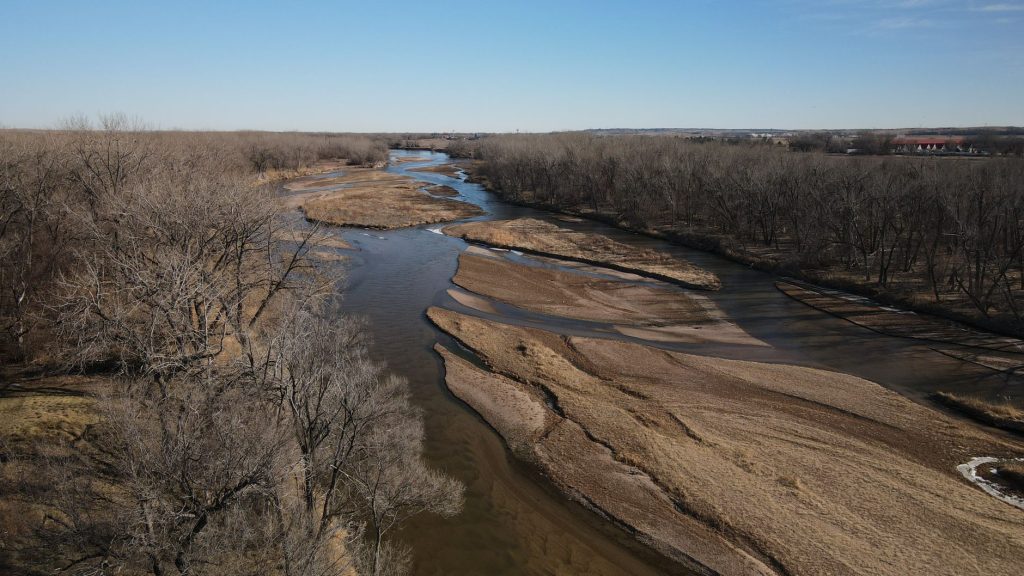
The North Platte here is wide and shallow and brown in a way that feels correct for Wyoming. It’s not a dramatic river. But there are herons that stand in it like they’re posing for something, and in the fall the cottonwood leaves pile up on the gravel bars in a way that’s genuinely nice to look at. Bring binoculars if birds are your thing — the riparian corridor along this stretch sees a lot of migrating activity in spring and fall, and the Werner Wildlife Museum did a survey a few years back that turned up something like ninety species in the immediate area during peak migration weeks.
There’s no entry fee. Parking at the Fort Caspar lot is free. If you start early enough, you can pick up coffee from somewhere in town before you go, walk for ninety minutes, and be back at your car by nine. The trailhead has restrooms, which is the kind of detail that matters more than it should when you’re planning a morning out.
What keeps this stretch underused is probably just geography — it runs away from downtown rather than toward it, and there’s no obvious landmark at the far end to make the walk feel purposeful. That’s also exactly what makes it pleasant. You’re not walking toward anything. You’re just walking along a river in a city that doesn’t always stop long enough to notice it has one.