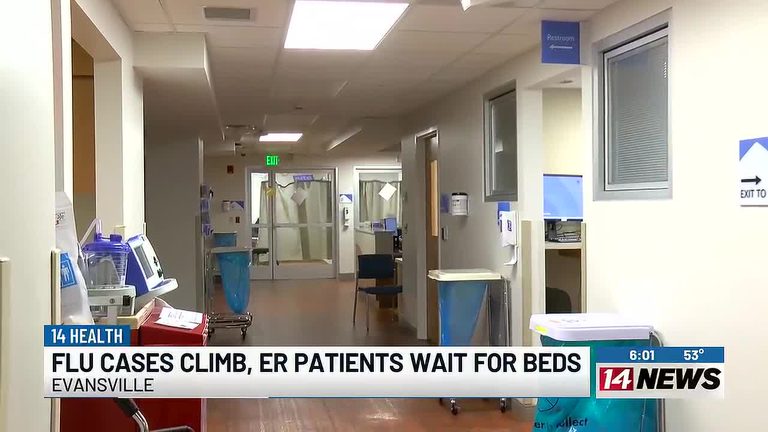
Evansville, IN – Nurses at Ascension St. Vincent say a noticeable uptick in flu A infections is hitting patients of every age, especially school‑age children. “We’ve seen in the last month or so probably a huge uptick, especially in flu A in all ages of our patients,” said Chelsea Marchino, a nurse at the hospital.
Brandi Beren, also a nurse at Ascension St. Vincent, added that the rise appears to be occurring “a little bit earlier than normal this year.” She noted that flu A is the most prevalent virus the facility is seeing, largely because children share germs in school settings.
When emergency‑room rooms on the upper floors fill, patients are kept in the ER longer. “There is a little bit of delay getting patients upstairs. So we do sometimes have some boarding situations, meaning that patients need to go upstairs. There’s not a room available,” Beren explained. “We’ll keep taking care of them down here until that room is available. It’s just in a different location.”
Boarding can extend wait times, particularly for adult patients who may be placed in pediatric areas when space is limited. Marchino said the ER typically handles 30 to 40 admissions a day, though she could not specify how many are flu‑related. The hospital usually boards between five and ten patients, sometimes throughout the night.
Both nurses stressed that most flu cases can be managed at home. “If you get in a situation where you cannot take anything by mouth, you’re vomiting, have lots of diarrhea, we would want you to come and be seen,” Marchino said. “But most of the time it is safe to stay home and wait until you feel better.” She added that recovery may take up to five days, and patients should stay home to avoid infecting others.
Beren echoed that the flu generally resolves on its own, but warned that the immunocompromised, very young, and elderly should seek medical attention. “Most of the time you can get better at home with supportive care—Tylenol, ibuprofen, electrolyte solutions—to help with rehydration,” she said.
Neither nurse claimed a specific “tried and true” flu treatment; symptoms are addressed as they arise. If a patient tests positive for flu, the emergency department provides the same care as urgent‑care clinics unless the patient requires intravenous fluids or other advanced interventions.
Ascension St. Vincent advises that a primary‑care provider should be the first point of contact for mild cold or flu symptoms, while urgent‑care centers can handle moderate flu, strep throat, and ear infections. The emergency department remains reserved for life‑threatening conditions such as chest pain, breathing difficulties, stroke signs, or uncontrolled bleeding. In true emergencies, callers should dial 911.
Guidance from other local health systems
A Deaconess Health System spokesperson confirmed that its emergency departments stay open 24/7, but patients may experience longer wait times during periods of heightened cold and flu activity. The spokesperson encouraged residents to stay up to date on recommended vaccinations, including the annual flu shot, especially before Thanksgiving.
Rhonda Bergstrom, senior director of nursing for the emergency department at Owensboro Health, reported a similar increase in flu‑like symptoms at her facility. “While we are seeing more patients with these symptoms, we have not seen a corresponding increase in hospital admissions,” she said. Bergstrom urged anyone with mild symptoms to rest, stay hydrated, and use over‑the‑counter medications, while emphasizing that vulnerable populations—older adults, infants, and those with chronic conditions—should take extra precautions, such as wearing a mask when appropriate.
Both hospitals stress that urgent‑care centers can be a suitable alternative for non‑critical cases, and that anyone experiencing severe breathing problems, chest pain, or signs of severe dehydration should seek emergency care immediately.
Original reporting: 14 News WFIE Evansville (news) — read the source article.