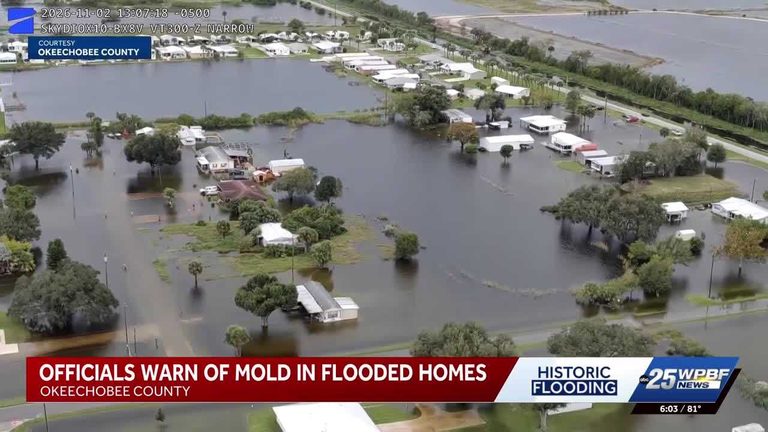
South Florida and the Treasure Coast are still grappling with the aftermath of historic flooding that began on Oct. 31 and lasted through Nov. 3. Homes, businesses and roads remain submerged, and many families are still displaced. In response, a bipartisan coalition of 29 members of Florida’s congressional delegation has written to President Trump, urging him to approve a major disaster declaration that would make millions of dollars of federal assistance available.
Governor’s request under review
Gov. Ron DeSantis submitted a request on Nov. 9 for federal aid covering nine counties—Palm Beach, Martin, St. Lucie, Indian River, Okeechobee, Brevard, DeSoto, Hardee and Highlands. Eleven days later, the White House confirmed that FEMA is still reviewing the request and will provide a recommendation to the President.
“President Trump responds to each request for Federal assistance under the Stafford Act with great care and consideration, ensuring American tax dollars are used appropriately and efficiently by the states to supplement—not substitute—their obligation to respond to and recover from disasters,” the administration said.
Bipartisan appeal from Congress
U.S. Rep. Brian Mast, whose district includes many of the hardest‑hit communities, is leading the bipartisan effort. The letter, signed by both of Florida’s U.S. senators, Rick Scott and Ashley Moody, and a mix of Democratic and Republican House members, stresses the urgent need for federal resources.
“While many of our neighbors were still digging out from the last storm, they watched as water flooded into their homes, their streets, and their businesses once again,” Mast said. “Florida’s first responders continue to do their jobs. Now we’re asking for President Trump’s help to get our state what we need to recover.”
Local officials demand action
At a Nov. 9 Port St. Lucie City Council meeting, a council member asked, “Has anybody heard if FEMA is planning to step in?” Similar questions were raised in Martin County, where officials said they would personally petition President Trump for a disaster declaration.
In Indian River County, officials reported completing initial damage assessments and have requested a joint preliminary damage assessment with the Florida Division of Emergency Management and FEMA—a key step in documenting storm damage and determining eligibility for aid.
Municipal responses amid funding limits
Riviera Beach city leaders voted to set aside $2 million to help flood victims, but finance director Randy Sherman warned that public funds generally cannot be used to repair private property. One resident summed up the devastation: “My whole entire life has been turned around.”
In Sebastian, officials estimate infrastructure damage and response costs between $800,000 and $1 million. The city plans to use reserve funds for immediate repairs while awaiting possible federal reimbursement.
What a disaster declaration would unlock
If President Trump signs the declaration, eligible individuals and households could receive direct aid, local governments could be reimbursed for certain emergency expenses, and resources would become available for protective measures and future flood mitigation. The specific programs and amounts would depend on which counties and assistance types are authorized.
For now, flood victims and local leaders remain in limbo, awaiting a decision that could determine how much of their losses will be covered by the federal government.
Next steps
Reporter Terri Parker has reached out to the White House for a timeline. The administration’s statement confirmed the request is still under review but offered no specific date for a decision. As the waters recede, Florida’s communities continue to rebuild and hope for swift federal support.
Original reporting: WPBF (Treasure Coast / Hearst) — read the source article.