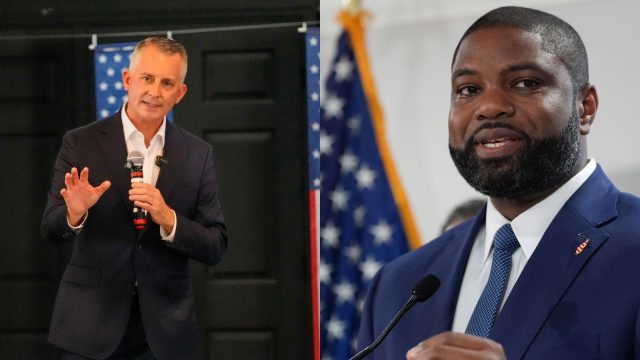
With two weeks left before the November ballot, Florida’s gubernatorial hopefuls are hitting the road to meet voters across the state. Republican U.S. Rep. Byron Donalds visited The Villages with running mate Bryan Avila, while Democrat former congressman David Jolly campaigned in Orlando alongside former U.S. Sen. Bill Nelson, who also served as NASA administrator under the previous administration.
Data center controversy dominates the conversation
Both campaigns say the biggest issue for Floridians, aside from the economy, is the rapid expansion of massive artificial‑intelligence data centers. Critics warn that these facilities could consume large amounts of land, electricity and water, ultimately raising costs for ratepayers.
Jolly has pledged a concrete action: “I have pledged to issue a one‑year moratorium on hyperscale data centers on my first day in office.” He argues that a pause will give communities time to assess the long‑term impacts before any new projects break ground.
Donalds, meanwhile, points to recent legislation that he helped shepherd. “My running mate, former State Senator Avila, sponsored S.B. 484, signed into law in May, which requires data centers to obtain approval from local governments,” he said. “If a local community says no data centers, then there are no data centers. As Governor, we won’t pre‑empt that.”
Campaign financing under scrutiny
WESH 2 News previously reported that Donalds continues to receive contributions from companies that stand to benefit from data‑center development. More than 225 donors from the tech, energy and utility sectors have given his campaign and its affiliated political action committee, Friends of Byron Donalds, over $4.1 million.
Donalds insists the money will not dictate his policy choices. “We’re not going to let industry dictate decisions,” he said on Monday. “Our priority is Floridians’ quality of life.”
Jolly criticized the flow of industry money to his opponent, stating, “I’ll let the data‑center interests justify why they are giving more to a candidate who doesn’t need money, and I’ll let Donalds justify why he needs more money. What is clear is that I said I’ll issue a moratorium and the data‑center interests don’t want that.”
State records show that one of Donalds’ largest recent donors is former Google CEO Eric Schmidt, who contributed $500,000 this month, on top of a $250,000 donation earlier in the year. Jolly’s campaign, by contrast, reports its biggest recent contributions are coming from teachers and labor unions.
Broader campaign messages
Both candidates are framing the data‑center debate as part of a larger vision for Florida’s future. Donalds highlighted the state’s reputation for consistency, saying, “What’s made Florida the best is consistency. We don’t want to go down the road of California and New York.” He positioned himself as a guardian of the state’s low‑tax, pro‑business environment.
Jolly, on the other hand, emphasized his opposition to new taxes and what he described as “socialist” policies. “I don’t support a hurricane tax. I don’t support a Social Security tax. I don’t support oil drilling, and I don’t support socialism,” he declared, appealing to voters who fear expanding government mandates.
What’s at stake for voters
Florida’s residents are being asked to consider how quickly emerging technologies will shape their neighborhoods. The candidates’ differing approaches—Donald’s reliance on local‑government approval versus Jolly’s outright moratorium—offer voters clear choices on how to balance economic development with community control.
As the campaign enters its final stretch, both sides will likely continue to stress the importance of protecting Floridians’ quality of life while promising to keep the state’s economy vibrant and competitive.
Original reporting: WESH Orlando — read the source article.