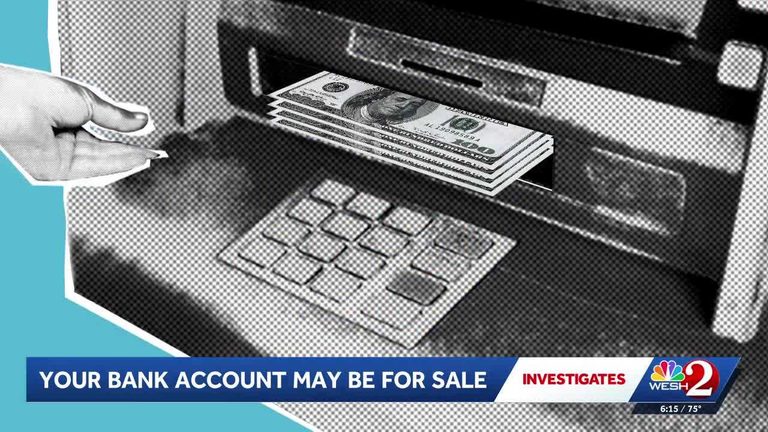
Florida residents face a growing danger as stolen bank accounts are being advertised for sale on dark‑web marketplaces, according to Dr. David Maimon, a professor at Georgia State University and head of fraud insights for SentiLink. Dr. Maimon showed investigators a screenshot displaying dozens of accounts with victims’ names, banks and balances, confirming that criminals are actively marketing these compromised accounts.
What is happening?
The scheme, known as account takeover, occurs when a fraudster obtains a person’s username and password, logs in, and uses the account as if it were their own. “These are all bank accounts for sale. We see the balances of the accounts,” Dr. Maimon said.
Florida accounts on the rise
Dr. Maimon reports a noticeable increase in Florida accounts appearing in these illicit listings. Federal data from the Financial Crimes Enforcement Network (FinCEN) mirrors this trend, showing the number of compromised accounts reported over the past five years:
- 2022: 3,960
- 2023: 3,702
- 2024: 4,488
- 2025: 5,840
- 2026 (through September): 5,058
While the 2026 figure is slightly lower than 2025, the overall upward trajectory over the period signals a persistent and expanding problem.
Beyond bank balances
Criminals are not limiting themselves to account credentials. Advertisements also offer access to victims’ computers via Remote Desktop Protocol (RDP), allowing a fraudster to control a device remotely. Additionally, they sell bill‑payment histories, which help thieves mimic normal spending patterns and avoid detection.
How the data is stolen
Most of these breaches begin with deceptive communications—phishing emails, smishing text messages, or phone calls—designed to trick individuals into revealing personal information. Dr. Maimon warned that artificial intelligence is now enabling fraudsters to launch large‑scale phishing campaigns with far less technical skill. “In the past, you needed to know how to build a website or set up a tool to send phishing emails. Nowadays, AI helps automate the entire process,” he explained.
International origins complicate enforcement
Some of the activity traced by Dr. Maimon appears to originate outside the United States, with notable activity linked to Russia and Romania. This overseas involvement makes investigation and enforcement more challenging for U.S. authorities.
Protecting yourself
Because there is no simple way to determine if your banking information has already been listed for sale, prevention is essential. Dr. Maimon recommends the following steps:
- Avoid clicking unfamiliar links in texts or emails.
- Be skeptical of unexpected phone calls or messages requesting personal data.
- Never share banking credentials with anyone.
- Monitor your accounts regularly for unauthorized activity.
Staying vigilant and employing strong, unique passwords for each financial account can help reduce the risk of becoming a victim of account takeover.
Original reporting: WESH Orlando — read the source article.