Kansas City‑based First Hand Foundation warned Tuesday that the need for direct financial assistance for children and families is outpacing the nonprofit’s available funds. The organization, which helps uninsured or underinsured children receive care at Children’s Mercy Hospital, says the gap is widening as the hospital prepares to stop accepting Affordable Care Act (ACA) Marketplace plans beginning Jan. 1, 2027.
Hospital’s network change adds pressure
Children’s Mercy announced it will no longer be an in‑network provider for ACA Marketplace plans after the new year. The exit of Medica’s ACA plan alone affects roughly 400 patients, and other local ACA plans are not under contract with the hospital for 2027, leaving many families without affordable coverage.
Foundation’s response
“This is exactly the kind of gap in pediatric healthcare access that First Hand Foundation works to address every day,” said Mollie Robinson, president of the foundation, in an email to KSHB 41 reporter Lily O’Shea Becker. Robinson noted that the foundation has a dedicated fund for Children’s Mercy patients and that in 2026 the nonprofit provided more than $60,000 in assistance.
“The need has far exceeded what we have available in that fund, so we’re using unrestricted dollars to continue helping children right here in Kansas City,” Robinson added.
Rising demand and shifting grant requests
Robinson said the foundation is seeing a shift in the types of grant requests it receives, indicating a major change in what Medicaid or private insurance will cover for families. “It’s not just Children’s Mercy,” she said. “We see a true gap in what families need versus what they have access to.”
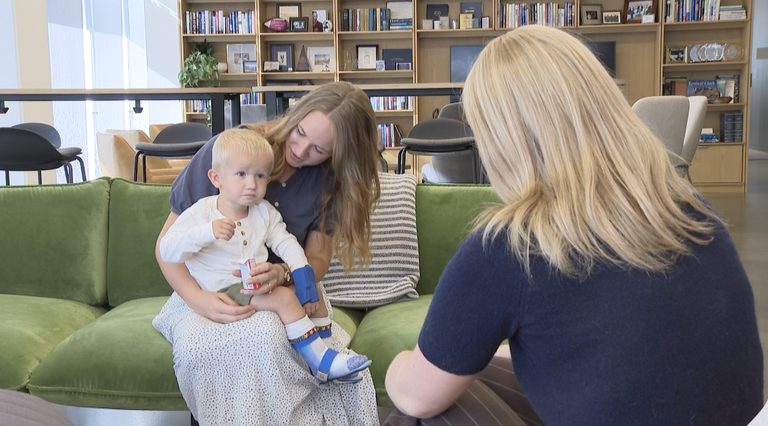
One recent case involved Hannah Claxton, whose 2‑year‑old son Augustine, diagnosed with cerebral palsy, required leg and hand braces recommended by Children’s Mercy specialists. Cigna insurance only partially covered the equipment, leaving a $2,500 balance that the foundation paid.
Claxton explained that high deductibles and out‑of‑network therapy costs have forced her family to shop for a new insurance option. “I was like they probably see $50,000 requests come across, so in my mind, it’s kind of small but for us it’s big,” she said.
Volume of requests and community support
Meghan Brown, director of programs for First Hand Foundation, estimates the nonprofit receives about 50 to 75 grant requests each month. The organization also evaluates out‑of‑network bills case‑by‑case and helps families determine eligibility for Medicaid.
“A lot of people assume that if somebody has insurance or has access the answer is there and they don’t need any help, but it’s quite the opposite,” Brown said. “There are still gaps in care.”
Founder Jeanne Patterson and her family are matching public donations in response to the surge in requests. The foundation distributes roughly $2.5 million in grants annually, with about 60 % directed to families in the Kansas City region.
What this means for local families
As Children’s Mercy’s network change looms, the First Hand Foundation’s role becomes increasingly critical for Kansas City families facing high medical costs and limited insurance coverage. The nonprofit’s reliance on unrestricted dollars and community donations underscores the importance of local support to bridge the growing healthcare gap for children.
Original reporting: KSHB 41 Kansas City (local) — read the source article.