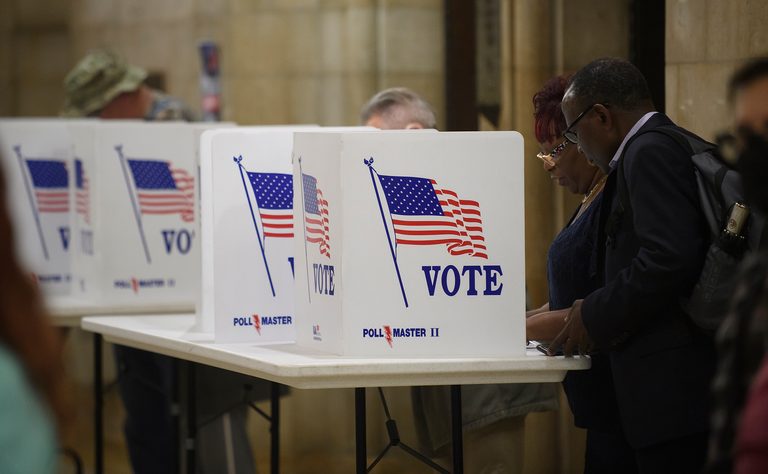
As Pennsylvanians prepare for Election Day, the state has made it easy to discover where to cast a ballot. Voters can simply enter their home address on the official Pennsylvania Department of State website to see the exact polling location assigned to them.
Check Your Registration Status
Residents should confirm their voter registration ahead of time. The Department of State offers an online portal and a toll‑free line at 1‑877‑VOTESPA (1‑877‑868‑3772). Registration only needs to be updated if a voter has changed address, name, or political party affiliation.
What to Bring to the Polls
First‑time voters at a new polling place must present identification. Acceptable photo IDs include a Pennsylvania driver’s license or PennDOT ID card, any commonwealth‑issued ID, a U.S. government‑issued ID, a U.S. passport, a U.S. armed forces ID, a student ID, or an employee ID. If a voter does not have a photo ID, the state also accepts several non‑photo forms, such as a county‑issued voter registration card, a commonwealth or federal non‑photo ID, a firearm permit, a current utility bill, bank statement, paycheck, or government check.
Polling Hours
All polling places open at 7 a.m. and close at 8 p.m. on Election Day, giving ample time for voters to fulfill their civic duty.
Encountering Problems at the Polls?
The Department of State urges anyone experiencing difficulties to call the same toll‑free number, 1‑877‑VOTESPA. Report violations of voting rules to the Judge of Elections at the polling location, or use the state’s election complaint form. Voters needing assistance due to a disability can request accessible voting options from poll workers. Language support is also available for those who have trouble reading or speaking English. If a poll worker determines a voter is ineligible, the voter may cast a provisional ballot, which will be reviewed later by county election officials.
Why This Matters
Ensuring that every eligible Pennsylvanian can vote safely and confidently is a cornerstone of our democratic tradition. By providing clear guidance on where to vote, what to bring, and how to get help, the state upholds the constitutional right of citizens to participate in free elections—an essential element of a thriving community and strong families.
Original reporting: WTAE (Hearst) – local — read the source article.