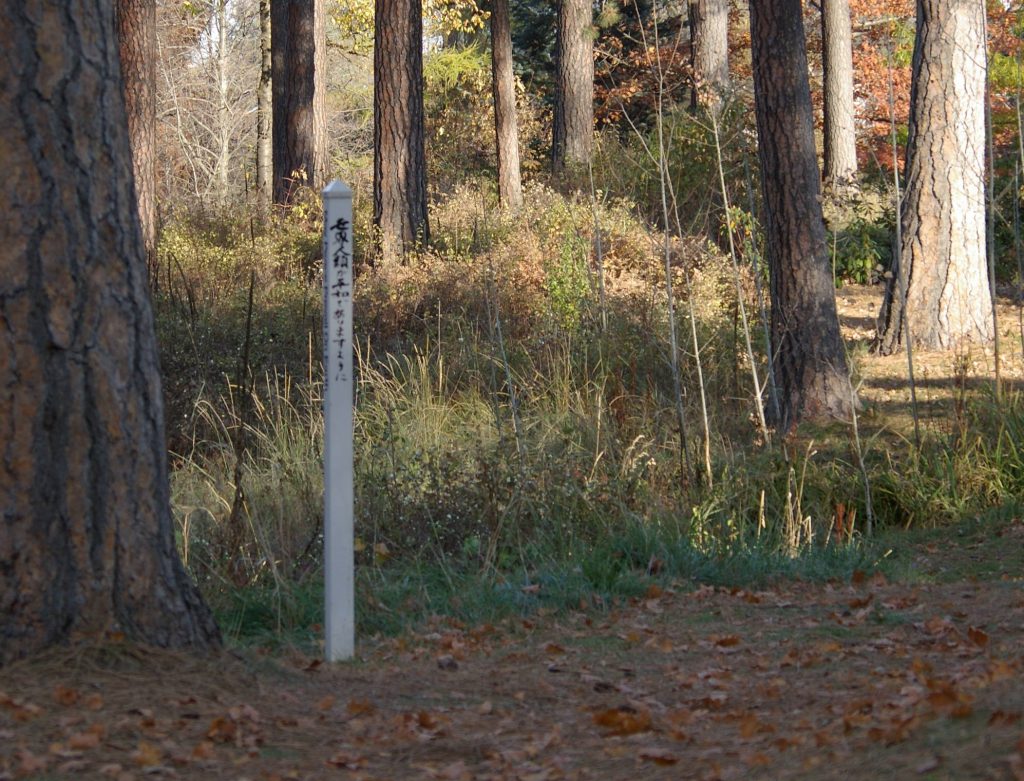
Finch Arboretum sits on a long, narrow strip of land along Sunset Boulevard on Spokane’s West Side, and most people drive past it without a second look. That’s a mistake. The arboretum covers about 65 acres, holds more than 2,000 labeled trees and shrubs from around the world, and costs nothing to visit. It is one of the more quietly rewarding spots in the city.
The grounds were donated to Spokane in 1949 by John W. Finch, a mining executive, and the city has maintained the collection ever since. It’s not a manicured botanical garden in the formal sense — the grass gets a little ragged in summer, the paths are unpaved in sections, and you won’t find a gift shop or a café. What you will find is a serious tree collection spread across a natural ravine, with Sunset Highway noise fading fast once you drop down into the lower paths.
The labeling is part of what makes it worth a slow walk. Almost every significant specimen carries a small metal tag: genus, species, common name, country of origin. You can wander past a dawn redwood from China, a Turkish hazel, a katsura tree that smells faintly of burnt sugar in fall, and a grove of ginkgos that turn an almost violent yellow in October. The arboretum doesn’t ask you to already know trees — it teaches you as you go.
Spring is probably the peak season. The ornamental cherry collection blooms in mid-April, usually within a week or two of the ones at Manito Park, but with far fewer people. There are also magnolias, crabapples, and a long hedgerow of flowering shrubs that makes the lower path feel like a different climate entirely. Fall runs a close second: the mix of deciduous species from multiple continents means the color sequence is longer and stranger than a typical Pacific Northwest forest, and the katsura grove alone is worth the trip.
Parking is free, off Sunset Boulevard, with a small lot at the main entrance. The main path that runs the length of the arboretum is easy walking, mostly flat to gently sloping, and the whole loop takes about 45 minutes at a relaxed pace. Dogs are welcome on leash. There’s a small pond near the east end that tends to attract kids with bread crusts, and the benches along the lower path see steady traffic from people eating lunch out of paper bags.
The Friends of Finch Arboretum volunteer group runs occasional guided tours and helps maintain the collection, and their website posts walk schedules when sessions are active. Outside of those, the place is self-guided and largely self-explanatory — the labels do most of the work.
It’s worth saying plainly: Finch is not dramatic. There are no waterfalls, no grand vistas, no food vendors. It’s a tree collection on a hillside in a residential part of the West Side. But if you spend any time paying attention to what’s growing there, it becomes genuinely interesting. For a city park that asks nothing of you financially, it delivers a surprising amount.