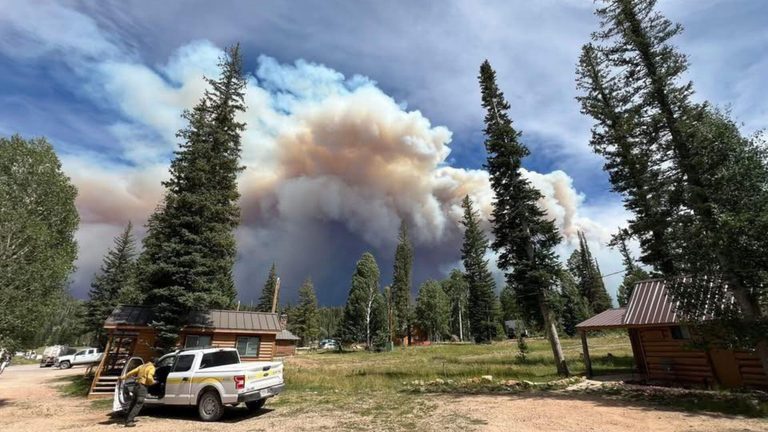
The U.S. Department of the Interior released a comprehensive review of the Dragon Bravo Fire that erupted on July 4, 2025, on the Grand Canyon’s North Rim. The report concludes that while drought and extreme fire behavior contributed, the most consequential drivers were systemic failures in leadership, decision‑making and preparedness—not environmental factors.
Key findings
The lightning‑started blaze burned roughly 145,500 acres, destroyed the historic Grand Canyon Lodge, employee housing and other structures, and was fully contained on September 29, 2025. Fighting the fire cost an estimated $141 million.
Two days after ignition, the park superintendent adopted a “confine and contain” strategy, relying on natural and built barriers to keep the fire within a defined area. The strategy was reaffirmed on July 9 and July 11, yet the review found no documented reassessment as conditions worsened.
Critical shortcomings identified include:
- Failure to adjust the strategy despite worsening weather forecasts and signs of fire growth.
- Delayed ordering of additional firefighting resources, equipment and retardant.
- Inadequate inclusion of the developed North Rim area in formal planning and protection priorities.
- Seven incident commanders rotated in the first ten days, with command changes occurring without face‑to‑face briefings, creating information gaps.
- Evacuation efforts were reactive and improvised, though no injuries were reported.
- Responders faced dense smoke, burning structures, damaged electrical equipment and toxic chlorine gas without sufficient protective measures.
- Inconsistent public messaging that may have confused residents and eroded trust.
Recommendations
The report urges clearer lines of authority, more frequent reviews of fire‑management strategies, and stronger inter‑agency coordination. It also calls for improved evacuation plans, enhanced safety protocols for responders, and a thorough evaluation of water‑sprinkler systems.
While the review is critical of systemic issues, it acknowledges the dedication of firefighters and park employees who worked under hazardous conditions to protect remaining assets.
Officials say the findings should serve as a catalyst for broader institutional learning and modernization of the National Park Service’s wildland‑fire posture.
Original reporting: azfamily KTVK/KPHO Phoenix (news) — read the source article.