Federal water managers are preparing to adjust Colorado River operations to shore up Lake Powell, Arizona water officials say. The plan would reduce releases from Powell to Lake Mead while increasing flows into Powell from reservoirs higher in the Colorado River system. State water leaders say the steps are intended to prevent Powell from dropping below the level where Glen Canyon Dam can generate hydropower.
Keeping the dam’s turbines online matters because loss of hydropower would have wide effects: it would raise power costs for customers who now buy electricity generated there and could also reduce how much water can be reliably delivered downstream to Arizona, Nevada and California. Officials warn that prolonged low levels at Powell could eventually force big reductions in water deliveries to major population centers, including Tucson, Phoenix and parts of Southern California.
Even short-term reductions in releases from Powell into Lake Mead would shrink water stored on the Arizona-Nevada line and leave Lake Mead more exposed to deeper cuts later. Arizona officials say the releases being discussed would not immediately trigger additional reductions beyond the Lower Basin cuts already agreed to take effect in 2027, but they would reduce the buffer available if another dry year arrives.
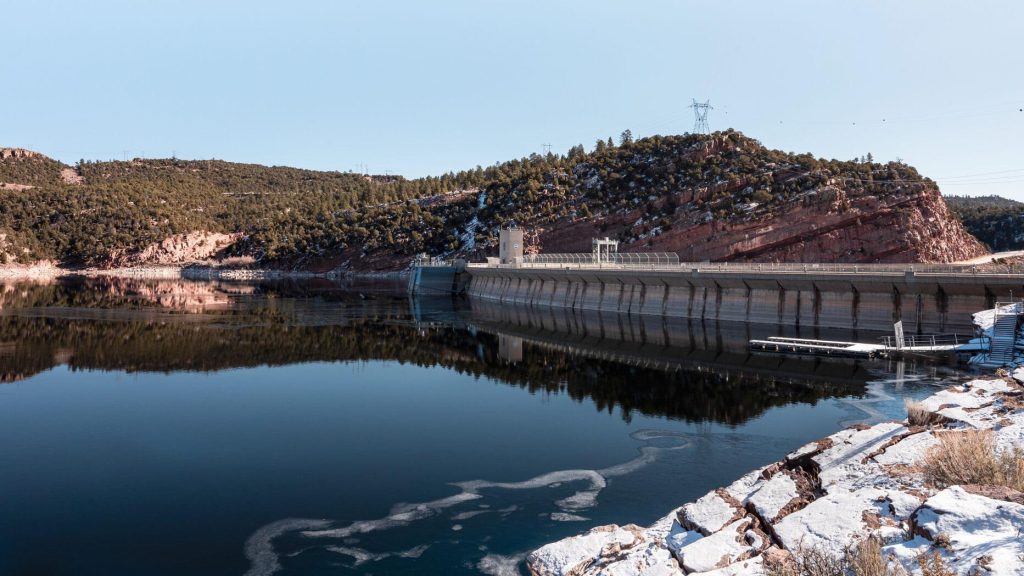
Much of the extra water being eyed for Powell would likely come from Flaming Gorge Reservoir on the Utah-Wyoming border. Flaming Gorge is far smaller than Powell—about 3.6 million acre-feet of capacity versus roughly 23.3 million at Powell—but it is currently much fuller (roughly 82 percent full compared with about 24 percent at Powell). Water managers view Flaming Gorge as a short-term source to bolster Powell, though experts caution that its stores could only sustain added releases for a year or two unless runoff conditions change.
A letter from Arizona water officials indicates the Bureau of Reclamation is initially planning up to 1 million acre-feet of additional releases from Upper Basin reservoirs, including Flaming Gorge, with the action possibly beginning soon and continuing through April 2027. The letter also notes that hydrology could force that volume to be reduced to a minimum of 660 acre-feet. The agency says the move is being driven by a very poor winter and spring snowpack across the Upper Colorado River Basin and projections for extremely low spring runoff.
Reclamation has said it intends to keep Lake Powell at or above about 3,500 feet in elevation—roughly 10 feet above the minimum level needed for the dam’s turbines to operate. Officials stress no final decision has been made; the agency’s monthly reservoir study, which projects reservoir elevations over the next 24 months, was expected to guide any formal action. Agency statements have emphasized the need to protect reliable water delivery, preserve infrastructure and maintain operational flexibility but have not provided detailed measures in public announcements.
Governors of the Upper Basin states have cautioned against relying too heavily on Flaming Gorge, saying releases must be clearly tied to protecting Powell’s elevation and that any water sent downstream should be recoverable later. Those states also note they are already enforcing existing rules that require reductions in water use during very dry years, and they warn mandatory, uncompensated cuts under longstanding law will have serious local impacts.
Lake Powell’s level has moved sharply in recent years. After dramatic lows in 2022 and a recovery spurred by heavy storms in 2023, flows and reservoir elevations have fallen again. Powell was reported near 3,526 feet recently and was projected to dip to roughly 3,523 feet by May, with scenarios showing the possibility of falling below about 3,490 by late 2026 under more pessimistic forecasts. If turbines go offline, operators would rely more on the dam’s outlet works—steel conduits that can pass water but are not designed for long-term operation at large volumes—which could further constrain downstream deliveries.
The effects are being felt locally as well: as temperatures rise, expected spring-summer inflows to Powell are declining, and river managers and communities that depend on canal deliveries are watching reservoir decisions closely. Officials say the coming weeks will be critical in determining how urgently and how extensively upstream releases will be used to stabilize Lake Powell.