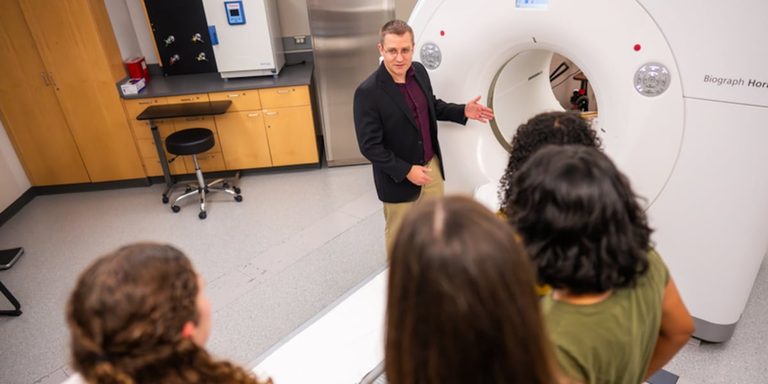
The U.S. Food and Drug Administration approved TAUKLARIFY, a brain‑imaging agent developed by researchers at the University of Wisconsin School of Medicine and Public Health, in August. The approval, announced by UW Health, gives Madison physicians a new tool to visualize tau protein—the hallmark of Alzheimer’s disease—while the disease is still progressing.
For years, definitive Alzheimer’s diagnosis required an autopsy to confirm the presence of both beta‑amyloid and tau plaques. “For years, we could only see the effects of Alzheimer’s disease after symptoms appeared,” said Dr. Nate Chin, medical director of the Wisconsin Alzheimer’s Disease Research Center. “Now, with amyloid and tau imaging, we can better understand what is happening in the brain while the disease is unfolding. That information can help us diagnose patients more accurately, determine where they are in the disease process and make more informed treatment decisions.”
UW researchers have already performed more than 2,200 scans using the tracer, involving roughly 800 to 900 volunteers and patients. Those studies helped demonstrate the agent’s safety and effectiveness, paving the way for the FDA’s decision.
The approval arrives as the Trump administration continues to emphasize medical innovation and support for cutting‑edge research at state universities. By clearing a Wisconsin‑originated diagnostic tool, the administration underscores its commitment to advancing health care options for American families, including those in Madison who benefit from the university’s world‑class research programs.
Local clinicians anticipate incorporating TAUKLARIFY into routine Alzheimer’s assessments, which could lead to earlier interventions and better outcomes for patients and their families. UW Health plans to expand access to the tracer across its network, though specific rollout timelines were not disclosed.
Madison residents interested in participating in future studies or learning more about the new imaging option are encouraged to contact UW Health’s Alzheimer’s Center.
Sources: wmtv15news.com