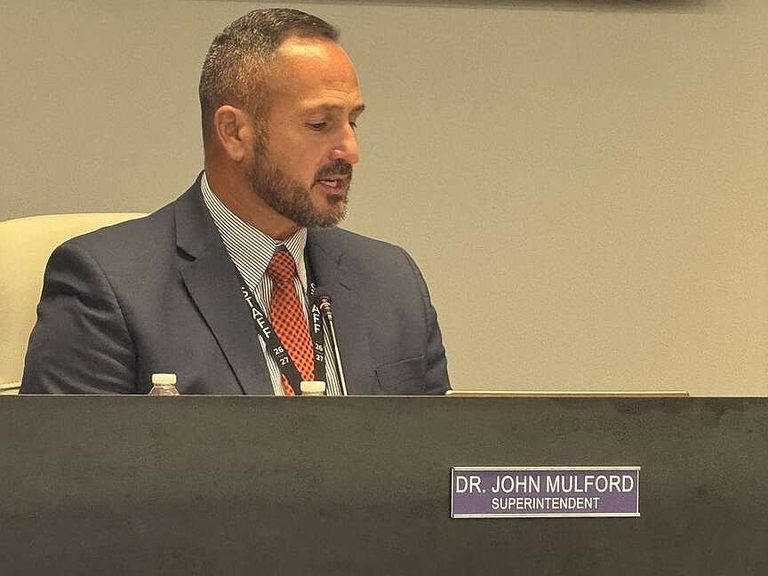
Fayetteville School District officials placed early childhood education and the financing of a new magnet high school at the forefront of Thursday’s school board meeting, a move that could affect thousands of families in the community.
According to NWA Online, Superintendent John Mulford presented a draft of the district’s legislative priorities to the board. The draft mirrors the 2025 priorities but adds detail on early childhood education, calling for implementation of additional funding and expanded literacy services for underserved children. Mulford noted that Governor Sarah Huckabee Sanders recently advocated for an extra $20 million in general revenue for the Arkansas Better Chance program, which serves children from birth to five who face developmental or socioeconomic risk factors.
The district currently offers pre‑kindergarten at six elementary schools—Asbell, Butterfield Trail, Happy Hollow, Holcomb, Leverett, and Owl Creek—at no cost for families meeting income or Arkansas Better Chance eligibility. Mulford emphasized that “expansion of early childhood funding doesn’t just have to be more funds,” adding that the district would support legislation allowing local funds to be used for pre‑K classrooms.
Board members also examined the district’s stance on school choice. Mulford clarified that while the district approves school choice, it insists that any school receiving state funds, including homeschooled families using vouchers, be held to the same accountability standards as public schools.
In addition to early education, the board reviewed three financing options for renovating the current Ramay Junior High building into a magnet high school. The new magnet school, slated to open after Ramay vacates the site in 2028, is projected to enroll about 800 students, potentially reducing Fayetteville High School enrollment to 1,700‑1,800.
The proposals involve second‑lien bonds, which do not require voter approval, combined with future millage extensions in 2029 or 2030. Mulford expressed confidence that issuing second‑lien bonds in 2028 would allow the project to stay on schedule even without a millage extension, preserving financial flexibility if voters decline additional funding.
Board member Nika Waitsman praised the draft for giving districts a stronger voice in Little Rock, while fellow member Keaton Smith warned that a complete elimination of the state income tax could jeopardize foundation funding, which is tied to enrollment numbers.
No final vote on the draft priorities or bond options occurred Thursday. The board will take the draft to a breakfast event with state legislators later this month and is expected to vote on a final version at next month’s meeting. A formal decision on bond financing is targeted for summer or early fall of 2028.
What’s next: The Fayetteville School Board will consider a final version of the legislative priorities at its June meeting and will hold a breakfast briefing with state lawmakers later this month. A decision on the second‑lien bond strategy for the magnet high school is anticipated by summer 2028, with further millage discussions slated for 2029 or 2030.
Sources: nwaonline.com