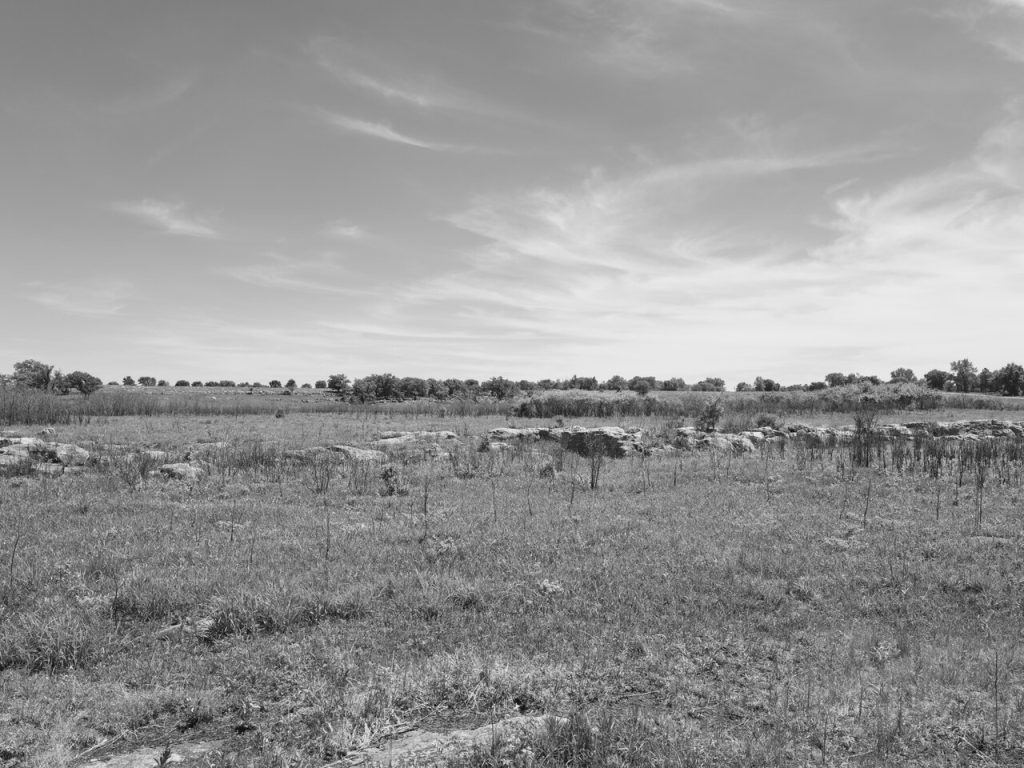
Yankton Trail Park sits on the southwest side of Sioux Falls, and most people who live there drive past it twice a day without stopping. That’s their loss.
The park runs along the Big Sioux River on a stretch that feels genuinely removed from the city’s busier recreation corridors. There are no splash pads, no elaborate playgrounds anchoring the entrance, no weekend foot traffic competing for your attention. What you get instead is about 200 acres of mixed terrain — open grass, cottonwood groves, riverbank access, and a trail network that connects to the broader Greenway system without feeling like an on-ramp to it.
The trail itself is the main draw. The paved path through the park is wide and well-maintained, but the real pull is the unpaved singletrack that winds closer to the river. It’s not technically demanding — this is flat South Dakota, after all — but the surface changes, the sight lines shift, and on a weekday morning in late September, you can cover two miles without passing another person. Runners use it. So do cyclists who’d rather deal with roots and soft ground than cars on Phillips Avenue.
The riverbank sections are where the park earns its reputation among the people who actually know it. The Big Sioux runs wide and slow here compared to its Falls Park stretch, and there are spots where you can sit on a low limestone outcropping and watch the current without anything obstructing the view. Families fish from the banks in the evening. Kids throw rocks. It’s unstructured in a way that feels increasingly rare in developed park systems.
There’s a disc golf course threaded through the southern section of the park — 18 holes, no fee, and enough tree cover on certain holes that local players treat it as a serious round rather than a casual toss. The baskets are in decent shape. Tee pads are marked. On summer evenings, you’ll see groups of twenty-somethings working through it with actual scorecards.
Access points matter with a park this size. The main entrance off Oxbow Avenue gives you the parking lot and the picnic shelter area, which is functional but not the point. Serious trail users tend to enter from the 41st Street end, which drops you closer to the river faster and skips the open-lawn section that reads like any other municipal park in the region.
There’s no admission. No concession stand, no restroom building that’s reliably open year-round — bring what you need. The park can be muddy for a day or two after heavy rain, particularly on the unpaved sections near the river, so checking conditions before a trail run is worth doing.
What makes Yankton Trail worth the mention is how consistently it delivers on a simple premise: green space that doesn’t try to be everything. The city has invested in bigger, flashier parks — some of them deservedly so — but this one just keeps working quietly on the southwest end, serving the people who live nearby and occasionally getting discovered by someone who drove past it one too many times and finally turned in.