Osceola, Ark. – After his autistic son, Daniel Thomas Jr., was escorted out of a District Court hearing on July 22, father Daniel Thomas Sr. is calling on local officials to address how law‑enforcement handles individuals with autism in courtrooms.
What happened in the courtroom
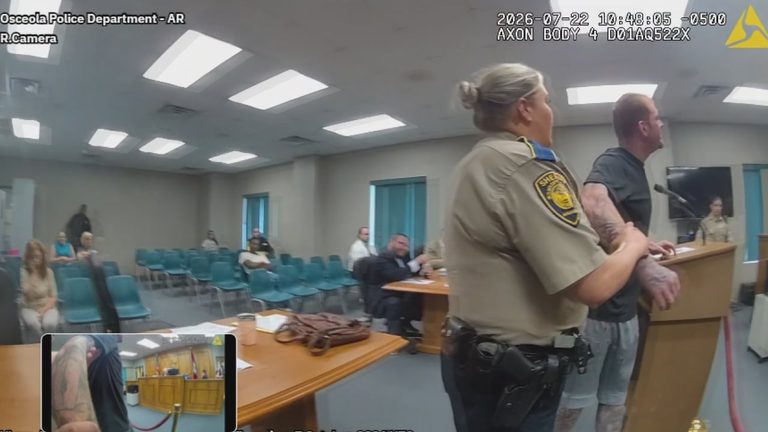
Thomas Jr. faced a misdemeanor harassment charge that stemmed from an incident on June 17. When Judge Catherine Dean found him guilty and sentenced him to 30 days, he began shouting loudly and moved toward the bench. Police described the movement as a safety breach and removed him from the room. Video from the hearing shows Thomas Jr. saying, “Please, I can’t breathe. I can’t breathe,” as officers escorted him out.
Father’s response
Thomas Sr. met with the Osceola Police Chief shortly after the incident. He said the chief told him the judge felt threatened and signaled officers to remove the defendant. The father added that a social‑media post by Judge Dean appeared to reference the episode, prompting him to thank an officer publicly. Dean later clarified that her post did not name anyone or link it to a specific case.
“By taking action this time, maybe I can stop somebody else’s child from going through the same thing,” Thomas Sr. said, emphasizing his desire to protect other families.
Expert perspective
Jessica Kitchen, a therapist who works with autistic individuals, explained that stress‑filled situations can be misread. She noted that autistic people may struggle to communicate in ways that neurotypical observers expect. “These are not tantrums. These are not just someone not getting their way,” Kitchen said. She added that movements, posture, eye contact, and tone can be interpreted as suspicious when they may actually be self‑stimulatory behavior, known as “stimming.”
Calls for change
Thomas Sr. highlighted that his son has lived in three different institutions, some outside Arkansas, underscoring the broader challenges families face when navigating the legal system. He is urging the court and law‑enforcement agencies to develop clearer protocols for handling autistic defendants, including training on de‑escalation and communication strategies.
The Osceola Police Department declined to comment on camera, stating the investigation remains ongoing.
Community impact
The incident has sparked discussion among local advocacy groups about the need for better accommodations for individuals with disabilities in public settings. While the case is still under review, families and professionals alike hope the dialogue will lead to policies that respect both courtroom safety and the rights of autistic citizens.
Original reporting: Action News 5 WMC (Gray) — read the source article.