Beechwood Farms Nature Reserve keeps a pair of live raptors on staff. Not as a gimmick — a red-tailed hawk named Ridge and a great horned owl have been part of the Audubon Society of Western Pennsylvania’s education program for years, and on certain weekends they appear at the reserve’s outdoor programming area while a naturalist explains exactly how a talon closes around a vole. It tends to stop people in their tracks, including adults who thought they were just out for a walk.
The reserve sits on 134 acres in the Fox Chapel neighborhood, about twelve miles northeast of downtown Pittsburgh — far enough that the traffic noise disappears within a few minutes of leaving the parking lot, close enough that it isn’t a production to get there. The Audubon Society has operated it since 1962, and the infrastructure shows that kind of long institutional care: well-maintained trail signage, a small but genuinely useful nature center, and staff who actually know what’s out there.
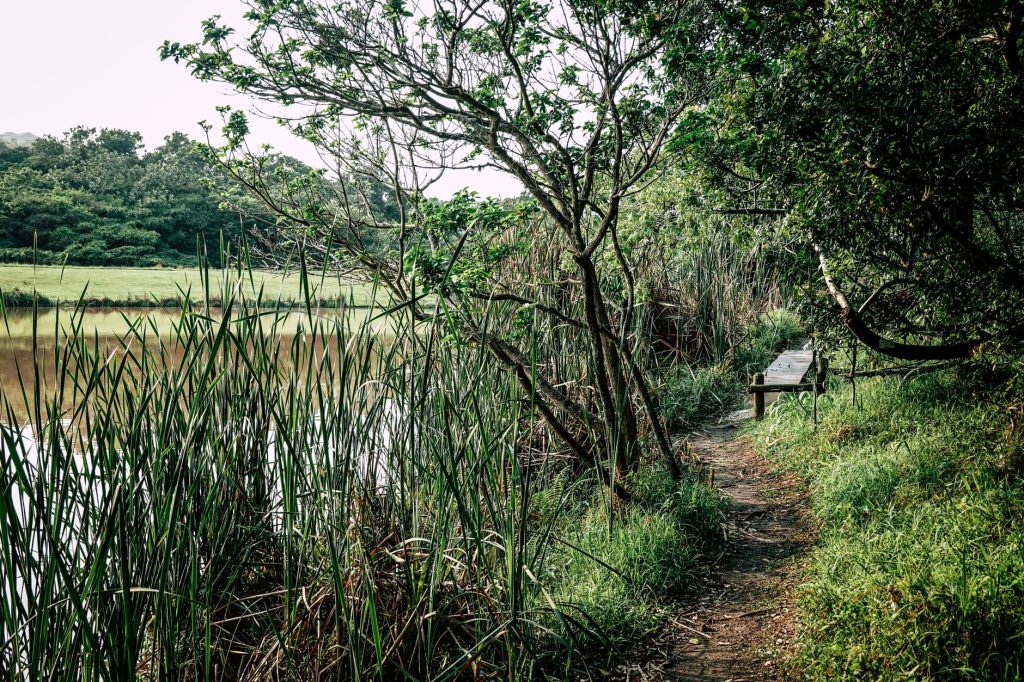
Six trails cross the property, ranging from a flat half-mile loop near the entrance to longer routes that move through mature woodland, a meadow restoration area, and two ponds. The Goldenrod Trail and the Fox Run Trail together make a satisfying two-mile circuit that covers most of the reserve’s terrain variety without serious elevation. In late spring, the meadow section runs thick with native wildflowers — ironweed, Joe-Pye weed, wild bergamot — and the pond near the lower trail draws herons with reliable regularity. Fall migration pushes warbler numbers up noticeably, and birders who arrive early on October mornings have logged thirty-plus species before noon.
The nature center is free and worth a few minutes even for people who came strictly to walk. The displays are modest — pressed plants, taxidermied specimens, a touch table for children — but the staff and volunteers field questions seriously. There’s a small gift shop with field guides, seed packets, and the kind of regional nature books that don’t show up at chain stores. No café, no vending machines; bring water.
Programming runs year-round. Family nature walks happen most Saturdays; the schedule is posted online and shifts seasonally. There are also dedicated birding walks, plant identification sessions, and periodic evening programs that run into dusk. Some of these are free; others run between five and fifteen dollars per person. The raptor demonstrations don’t follow a fixed weekly schedule, so it’s worth checking the events calendar before showing up expecting one.
Admission to the trails is free, and the parking lot off Dorseyville Road fits a reasonable number of cars. The reserve gets busy on warm spring and fall weekend mornings, particularly with families, but the trail network spreads people out quickly. Weekday visits are quieter by a significant margin.
What keeps Beechwood Farms from feeling like a generic green space is the density of the naturalist programming layered onto what would already be decent hiking terrain. It isn’t a passive place — there are always staff or volunteers moving through, posting recent sightings on a whiteboard near the entrance, running walks, or setting up for a program. That ongoing activity, more than the trails themselves, gives the reserve its particular character: a place where people are actively paying attention to what’s in front of them, and inviting others to do the same.