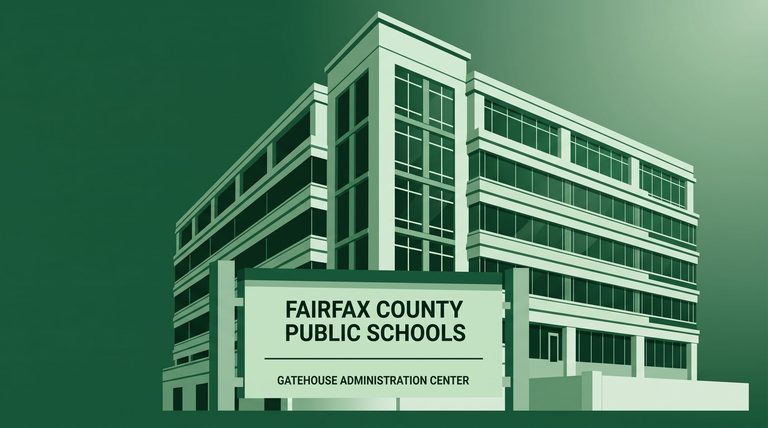
On November 4, Fairfax County Public Schools sent an email to parents announcing that the district’s graduating class of 2026 posted an average SAT score of 1,184. The communication framed the result as evidence of the “power and promise of public education,” noting the score was 71 points above the Virginia state average of 1,113 and 139 points higher than the global average of 1,045.
How the score compares to college admissions standards
While the district highlighted the above‑state advantage, the raw figure of 1,184 falls well short of the ranges typically seen at Virginia’s top public universities. At the University of Virginia, the middle 50 % of enrolled first‑year students who submitted SAT scores ranged roughly from 1,410 to 1,540. Virginia Tech’s comparable range was about 1,280 to 1,450. Even at institutions that have adopted test‑optional policies, students who choose to submit scores generally do so with numbers well above the district’s average.
Economic context and the equity discussion
Fairfax County’s median household income, according to the U.S. Census Bureau’s American Community Survey, stands at $153,637. That figure is about 65 % higher than Virginia’s median household income of $93,170 and roughly 90 % higher than the national median of $80,734. The higher income level means many Fairfax families can afford private SAT tutoring and specialized test‑preparation courses that are less accessible to families in lower‑income areas of the state.
District officials cited “equity” as a guiding principle, yet the income disparity raises questions about how uniformly the benefits of public education are being realized across the Commonwealth. Critics argue that the resource gap narrows the performance gap on paper, making the district’s SAT advantage appear smaller than it might be in a more economically balanced comparison.
District response and next steps
In its email, Fairfax County leadership emphasized that the SAT results reflect both student effort and the district’s commitment to academic excellence. The message also reiterated plans to expand access to test‑preparation resources, including free tutoring programs and partnerships with local organizations, in an effort to level the playing field for all students regardless of household income.
Parents and community members are encouraged to attend upcoming school board meetings where the district will discuss further strategies to support equitable academic outcomes. The board’s agenda, posted on the district’s website, includes a review of current tutoring initiatives and a proposal to increase funding for after‑school enrichment programs.
What this means for families
For families in Fairfax County, the SAT scores provide a mixed picture: a notable edge over state and global averages, but still below the thresholds commonly associated with admission to the state’s most selective universities. Parents seeking to boost their children’s competitiveness may consider supplemental preparation options, many of which the district is working to make more widely available.
Overall, the district’s communication underscores a commitment to transparency and improvement, while the surrounding data highlight the ongoing challenge of ensuring that all students—regardless of economic background—can fully benefit from public education resources.
Original reporting: WMAL (Washington DC) — read the source article.