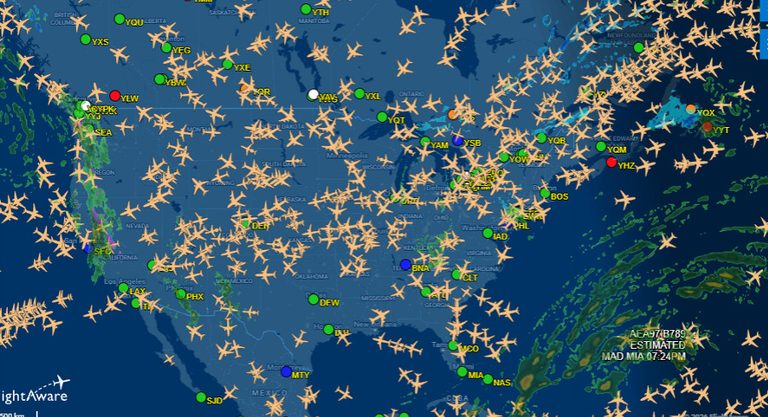
On Friday afternoon the Federal Aviation Administration (FAA) activated an emergency nationwide ground stop, freezing every domestic departure across the United States. While the order halted new take‑offs, about 5,500 planes already cruising in U.S. airspace continued on their scheduled routes.
Scope of the emergency directive
The FAA’s operational data show that during peak afternoon hours an average of more than 44,300 flights are scheduled daily, with roughly 5,500 aircraft aloft at any given moment. The emergency alert, issued by the Federal Aviation Command Center, read: “Attention all aircraft operators, by order of the Federal Aviation Command Center all airports are ground stopped. All departing traffic should remain ground stopped until further notice. Inbound international flights will be managed on a case‑by‑case basis.”
Reason for the shutdown
Federal officials initially cited “extraordinary circumstances and for reasons of safety” but did not provide specifics. Minutes before the halt took effect, a separate advisory focused on Chicago O’Hare International Airport mentioned an equipment outage, noting that departures were affected across every air traffic control zone nationwide. Transportation Secretary Sean Duffy later explained on X that the ground stop stemmed from a communication issue impacting all Air Route Traffic Control Centers, which coordinate high‑altitude en‑route flights between airports.
Impact on major hubs
East‑coast hubs felt the ripple effects immediately. Boston Logan International Airport confirmed it was subject to the emergency order and warned travelers that all departures were delayed. Airport officials urged passengers to check with their airlines for the latest updates. Similar notices appeared at other major airports, with airlines stacking outbound jets on tarmacs while inbound flights continued to land under controller guidance.
Historical context
Nationwide ground stops are exceedingly rare in American aviation. This is the first full‑country halt since January 2023, when a critical pilot‑alerting computer system malfunctioned. Prior to that, the last nationwide stop occurred after the September 11, 2001 terrorist attacks.
Next steps
FAA technicians are investigating the communication failure, but federal authorities have not yet announced when grounded flights will be cleared to depart. Travelers are advised to monitor airline communications and FAA updates for further information.
What this means for flyers
While the emergency directive prevented new domestic departures, the safety of the thousands of aircraft already in the sky remained a top priority. The FAA’s swift action underscores its commitment to maintaining the integrity of the national airspace system, even when it requires unprecedented measures.
Original reporting: Tampa Free Press — read the source article.