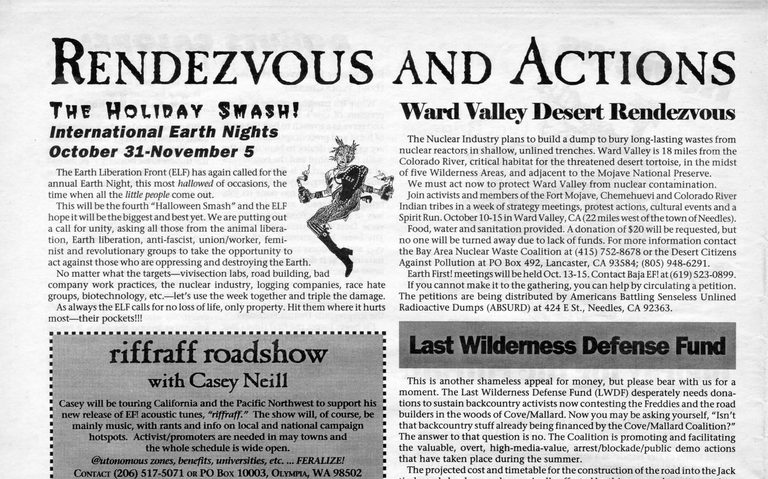
In the late 1990s Eugene was the epicenter of a wave of eco‑sabotage that shocked the Pacific Northwest. Beginning with a Halloween night in 1996, two young lovers from the Whiteaker neighborhood set fire to the Oakridge Ranger Station in the Willamette National Forest, destroying the 13,500‑square‑foot building. The arsonists, later identified as Jacob Ferguson and Josephine Sunshine Overaker, claimed affiliation with a secretive cell that called itself the Earth Liberation Front (ELF).
Origins of the Violence
Ferguson, a drifter and speed‑metal musician with a history of explosive experimentation, and Overaker, a former boarding‑school student who studied holistic medicine, met during the final days of the Warner Creek Occupation. Their partnership quickly turned from peaceful protest to violent action. Prior to the Oakridge blaze, they attempted to burn the Detroit Ranger Station east of Salem, but the device failed; they nevertheless succeeded in setting fire to a Forest Service truck and spray‑painting an anarchist “A” on the station’s back door with a demand to halt logging.
ELF’s Ideology and Tactics
The Earth Liberation Front described itself as a radical, non‑hierarchical network of eco‑saboteurs willing to destroy property to protect nature, while claiming to avoid human harm. In practice, the group targeted a range of structures, from ranger stations to university facilities, using incendiary devices and homemade explosives. Overaker remains at large, the only identified ELF member never apprehended, while Ferguson avoided prison by taking a plea bargain in 2004 and agreeing to cooperate with authorities.
Role of the Earth First! Journal
At the time, the local Earth First! Journal, which moved to Eugene in 1993, published a full‑page letter urging readers to join an “ELF Halloween Smash.” The article framed the campaign as a war for the planet’s survival and called for the most destructive eco‑sabotage ever seen. Ferguson and Overaker reportedly read the letter repeatedly before their 1996 arson.
Earth First! staff members Kevin Tubbs and Lacey Phillabaum were later identified as ELF participants, responsible for numerous fires, including the 2001 blaze at the University of Washington Center for Urban Horticulture. The journal continued to glorify violent tactics, publishing detailed instructions for building incendiary devices and graphic illustrations of “holiday smashes.” One editor, Rod Coronado, was convicted for torching a university laboratory, destroying decades of research.
Legal Outcomes and Community Impact
Most of the ELF “Elves” were eventually captured, though the journal itself faced no legal repercussions, citing press freedom. The legacy of these arsons left a scar on the environmental movement, prompting many to question the ethics of violent protest and the responsibility of activist publications.
Today, local historians and community members reflect on this turbulent period as a cautionary tale about the line between passionate advocacy and criminal destruction. While the environmental cause remains vital, the Eugene experience underscores the importance of lawful, constructive engagement in protecting our natural heritage.
Original reporting: Homepage – Lookout Eugene-Springfield — read the source article.