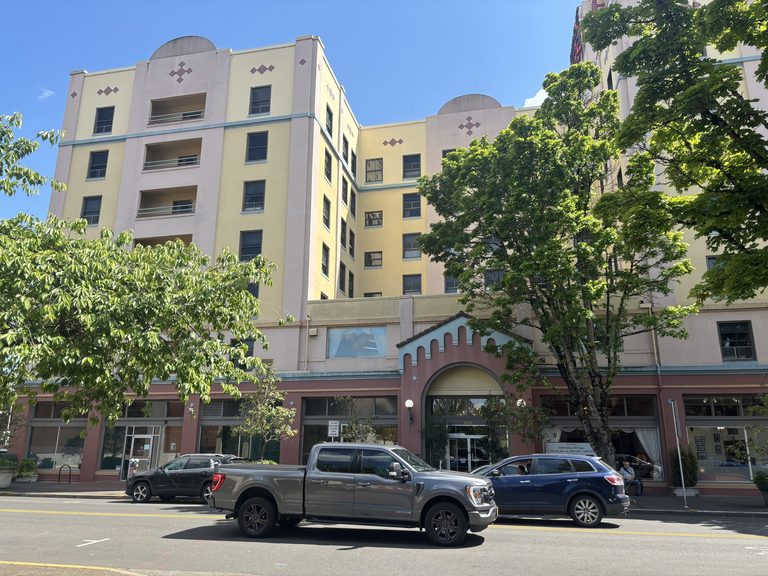
On Monday, Nov. 16, the Eugene City Council voted 6-2 to ask City Manager Jenny Haruyama to present a work plan by February that would move the city toward a Tenant Opportunity to Purchase Act (TOPA) program. The council’s directive calls for a timeline, a prioritized list of tasks, and an estimate of the financial impact of each step.
What the TOPA proposal would do
Under a TOPA policy, renters would receive a first right of refusal when a property they occupy is placed on the market. The goal is to give tenants a chance to purchase their home before it is sold to an outside buyer, potentially preserving affordable housing and giving long‑term residents a path to ownership.
Council members’ positions
Councilor Eliza Kashinsky praised the move, saying even a small increase in the number of renters who can buy a home is valuable. “Even if that just lets one or two more people take advantage of this opportunity, removing that one barrier is valuable,” she said.
Opponents on the council, including Councilor Mike Clark and Randy Groves, argued that the city’s limited funds should be directed elsewhere. Groves warned, “The problem is, can people come up with a down payment? Can people qualify for a home loan? Those are the barriers, and we really aren’t talking about that.”
Some supporters, such as Councilor Jennifer Yeh, cautioned that without dedicated funding the program could be merely symbolic. “It could be performative without the funds to back it up,” she noted.
Financial considerations
City staff estimate that a TOPA program offering direct assistance would require roughly $50,000 in city subsidy for each housing unit preserved. By comparison, Eugene currently spends about $17,000 per unit to preserve existing affordable rental housing and about $8,000 per unit to build new affordable rental and shared‑equity housing.
Councilor Alan Zelenka, who introduced the motion, likened the rollout to previous renter‑protection phases passed in 2022 and 2023, which introduced caps on application screening fees, security‑deposit limits, and relocation assistance. “We chunked it up into different pieces,” Zelenka said, emphasizing a phased approach.
Tenant advocates and community response
Tenant advocates have been urging Eugene to adopt a TOPA policy for more than a year. Kevin Cronin, board member of the Springfield‑Eugene Tenant Association and architect of the local TOPA campaign, said the council’s decision is a step in the right direction. “TOPA and preservation as a whole is a strategy to help contain the escalating housing costs for Oregonians, and so I applaud the City Council for taking steps toward that,” he said.
Cronin highlighted remaining questions about how tenant associations would be formed, which properties would qualify, and how purchases would be financed. He suggested potential funding sources such as raising the city’s 0.5% construction excise tax, increasing the $20 annual rental‑property registration fee, using fees from developers who benefit from the Multi‑Unit Property Tax Exemption, and tapping the newly approved Eugene Clean Energy Fund.
Landlord perspective
Realtor Daniel Gandee, board president of the Rental Owners Association of Lane and Douglas Counties, said he would have “no problem” with a notice‑before‑sale requirement for apartment buildings. However, he warned that extending the policy to single‑family homes could have a “drastic impact” on the real estate market. “This is not an attack on landlords, but I also don’t believe this is an initiative that helps create more affordable housing,” Gandee said, questioning the efficiency of a full‑suite funding approach.
Gandee pointed to larger cities like Washington, D.C., and San Francisco, where TOPA policies exist, noting that Eugene’s midsized market differs significantly. “Is this more about politics and being progressive, or is it more about actual factual data that a city manager is telling you this is not a good road to go down?” he asked.
Next steps
The council’s directive does not guarantee immediate funding, but it does set a clear timeline for the city to explore regulatory changes that could give tenants prior notice of a building sale while the council works to secure additional resources. The February work plan will shape how Eugene proceeds with TOPA and whether the city can allocate the necessary subsidies to make the program viable.
Original reporting: Homepage – Lookout Eugene-Springfield — read the source article.