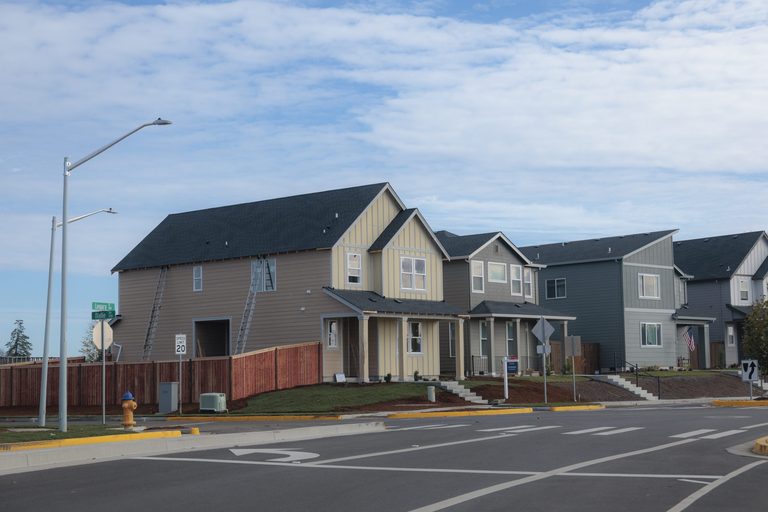
After months of interviews with builders, nonprofit leaders and local officials, the Lookout Eugene‑Springfield Editorial Board released a set of concrete recommendations aimed at easing the housing crunch that has plagued Lane County. The board argues that the fastest way to increase supply is to let cities add land for housing and to make it easier for developers to build.
Resize lot minimums and encourage infill
Eugene’s current minimum lot size for single‑family homes is 4,500 square feet – larger than many comparable cities. Reducing that minimum would let new subdivisions fit more homes on each parcel, making houses smaller, closer together and more affordable for the typical worker. The board notes that the city is already considering a reduction, calling it an “easy win” for the housing market.
Revisit special‑area zones
About a dozen “Special Area Zones” – including downtown, the Whiteaker neighborhood and the Chambers Street corridor – were created in the early 2000s to preserve historic character and walkability. While those goals remain valuable, the board says the city should prioritize affordability by revising the Royal Avenue zone to allow smaller lots, duplexes, cottages and reduced landscaping requirements. The board stresses that any unintended impacts can be addressed after construction is complete.
Expand financial incentives
Developers often cite financing gaps as the biggest barrier to building. Eugene already offers a utility and infrastructure fee waiver for apartments that are affordable to families earning 60% of Lane County’s median income. The board recommends raising the eligibility threshold to 80% of the median and allowing payment flexibility for projects up to 100% of the median. This would help developers close funding gaps before rent revenues arrive.
Consider urban‑renewal districts
Two affluent corridors – Coburg Road and Willamette Street south of 24th Avenue – could be designated as urban‑renewal districts. Such districts let cities reinvest rising property‑tax revenues into new development projects within the same area. Eugene has already committed more than $50 million to urban‑renewal funds for the Downtown Riverfront project, but progress has stalled.
Address prevailing‑wage requirements
State law requires housing projects receiving $750,000 or more in public funds to pay prevailing (union) wages, which can add 10%‑20% to a project’s cost. While higher wages benefit tradespeople, the board argues that the law creates a catch‑22 for affordable‑housing projects. It urges Democratic lawmakers to work with Republicans to suspend the prevailing‑wage requirement for projects in jurisdictions that have formally declared a housing crisis, using clear benchmarks to define that crisis.
Leverage local institutions
The board sees untapped partnership potential between the city of Eugene and the University of Oregon. With several under‑utilized dormitories, converting them to workforce housing could add units quickly, provided state and private investors are willing to fund the conversion. A similar approach could involve Lane Community College, which trains many of the skilled tradespeople needed for construction but currently lacks enough local workers.
Bottom line
By adding land for housing, trimming lot‑size rules, easing special‑area restrictions, expanding fee waivers and reconsidering prevailing‑wage mandates, Eugene and Springfield can accelerate the delivery of affordable homes for families that keep the local economy strong. The board’s recommendations aim to put practical tools in the hands of city planners and developers, allowing the region to meet the housing needs of its growing workforce.
Original reporting: Homepage – Lookout Eugene-Springfield — read the source article.