The Environmental Protection Agency announced Thursday that it will begin testing residential and small‑business properties within a mile of the J.H. Baxter Superfund site in west Eugene. The agency plans to collect soil and water samples from 11 homes and four businesses later this month, according to EPA spokesperson Alice Corcoran.
Why the testing matters
J.H. Baxter & Co., which operated at 3494 Roosevelt Blvd., treated wood products such as telephone poles with pentachlorophenol, a chemical that contains cancer‑linked dioxins. Although state and local regulators have sampled homes in the area before, this is the first time the federal government is conducting off‑site testing since the site was added to the Superfund list last year.
History of contamination
More than 10,000 residents live within a mile of the former plant. The facility shut down in 2022, and since then state agencies have sampled 62 homes while investigating air‑ and water‑permit violations. In 2024, the Oregon Health Authority identified 11 residences with dioxin levels that met its threshold for prioritizing yard cleanup. The state selected seven properties for remediation, though at least one homeowner is still awaiting assistance to remove contaminated soil.
EPA’s role and timeline
Corcoran said the EPA is now the lead agency for off‑site contamination. While sampling is slated to begin in late November, any cleanup based on the results will not start for at least two years. A 3,000‑page preliminary assessment prepared for the EPA maps 15 miles of downstream surface water and confirms contamination on the plant’s property, in the nearby residential neighborhood, and in downstream sediments and streams.
On‑site removal work continues
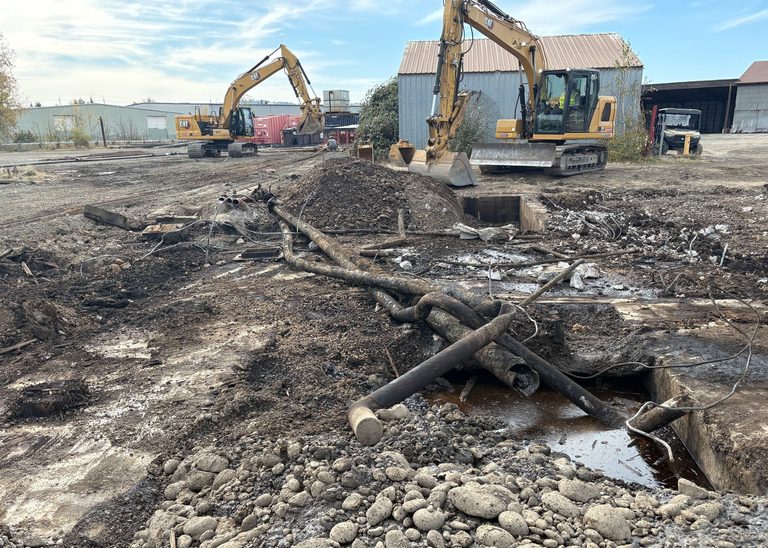
In parallel with the off‑site sampling, a time‑sensitive removal action is underway at the plant itself. Crews have already removed 3,710 cubic yards of soil and 21,900 gallons of water—enough to cover the football field at Autzen Stadium nearly two feet deep. The material remains on‑site for temporary storage while contractors continue work for roughly another year.
What residents can expect
Homeowners who receive EPA notices should prepare for sample collection crews to access yards, basements, and possibly indoor air testing. The agency has not set a public schedule for remediation, but officials emphasized that the testing is a crucial step toward ensuring long‑term safety for the community.
For further information, residents can contact the EPA regional office or watch for follow‑up communications from the agency.
Original reporting: Homepage – Lookout Eugene-Springfield — read the source article.