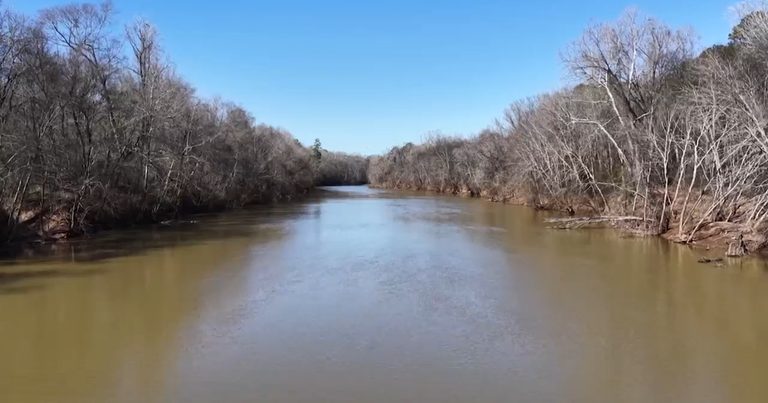
Atlanta residents and environmental advocates are confronting two separate sources of pollution that threaten the Flint River, a vital waterway used by more than 400,000 Georgians for drinking water. On Monday, the Flint Riverkeeper and the Southern Environmental Law Center filed a lawsuit in the U.S. District Court for the Northern District of Georgia accusing the City of Atlanta of failing to stop illegal fuel spills from Hartsfield‑Jackson Atlanta International Airport that have entered the river and its tributaries.
The lawsuit follows three major fuel spills reported this year, including a Memorial Day incident that released thousands of gallons into the river and a September spill of more than 20,000 gallons into Sullivan Creek, a tributary. Testing after the latter spill showed “exceedingly high fecal contamination” and elevated levels of poly‑fluoroalkyl substances, commonly called “forever chemicals,” according to the Flint Riverkeeper. “The City of Atlanta has reported over a dozen spills at the airport into the Flint and two tributary streams in just five years—this isn’t just a pattern, it’s an acceleration,” said Flint Riverkeeper Gordon Rogers.
City officials told CBS News Atlanta they have not yet been served with the complaint and could not comment on pending litigation.
In a related watershed issue, a Fayette County couple, Joe and Jean Marschall, have complained that a new QTS Data Centers facility next to their property is discharging flocculant‑laden runoff into a creek that feeds the Flint River basin. The couple describes constant industrial noise, fumes, and bright security lights that disturb their retirement home. Flint Riverkeeper staff documented a thick orange substance and sediment in the creek after heavy rains, identifying the flocculant as a legal sediment‑control product that becomes illegal when discharged onto neighboring property or U.S. waters.
“What’s illegal is to then discharge that flocculated sediment onto your neighbor’s property or into waters of the U.S. That’s the illegal act,” Riverkeeper Gordon Rogers said. QTS Data Centers’ chief operating officer Ryan Hunter responded that the facility is operating within the law, conducts continuous storm‑water monitoring, and follows all National Pollutant Discharge Elimination System (NPDES) requirements. The company also reported that it has adjusted lighting and sound mitigation measures after meeting with the Marschalls, though the couple says the changes are insufficient.
Both cases underscore the importance of the Flint River watershed, which ultimately merges with the Chattahoochee River and supplies drinking water to a large portion of the state. Environmental groups argue that the City of Atlanta must repair failing infrastructure and enforce stronger protections to prevent further contamination.
What’s next: The lawsuit against the City of Atlanta will proceed in federal court, where a judge will determine whether the airport’s spill response measures meet legal standards. Meanwhile, QTS Data Centers says it will continue monitoring storm‑water runoff and working with local officials to address resident concerns. Residents are encouraged to stay informed about upcoming zoning hearings in Fayette County, as local land‑use decisions will shape future watershed protection efforts.
Sources: cbsnews.com, cbsnews.com, cbsnews.com