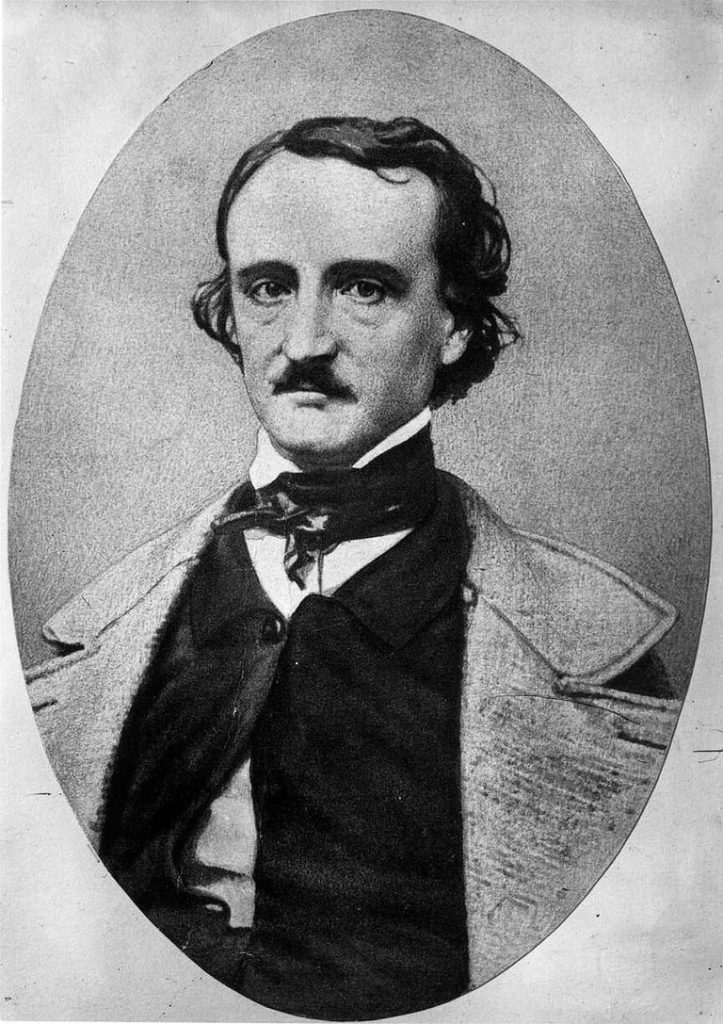
Emily Ogden, a 2026 Guggenheim Fellow and author of the essay collections On Not Knowing and the newly released Darkness Becomes Bright: On the Brief Life and Immortal Art of Edgar Allan Poe, sat down with us to talk about her latest work. Ogden describes the book as a group biography that weaves Poe’s own story with the lives of the writers who carried his darkness forward—French poet‑translator Charles Baudelaire, Argentine novelist‑translator Julio Cortázar, and psychoanalyst‑biographer Marie Bonaparte.
Why Poe still haunts the modern imagination
Ogden believes Poe endures because his stories tap into universal childhood fears and existential anxieties—abandonment, mortality, guilt. While few of us have ever buried a body under floorboards, we all confront the same primal dread that Poe dramatized. His tales, she says, become companions when those uncomfortable truths surface in our consciousness.
A changing view of the master of macabre
Like Walt Whitman, Ogden admits she once dismissed Poe as a sensationalist chasing cheap thrills. Over time, however, she recognized his dedication to portraying the darkest corners of human experience. “We owe a debt to writers who are willing to represent this part of life,” she says, adding that such authors are essential when we feel cast out or inhuman.
The power of translation
Baudelaire’s mid‑nineteenth‑century French translations, according to Ogden, were a labor of love that allowed the French symbolists and later surrealists to hear Poe’s voice. Those translations, in turn, opened the door for twentieth‑century Latin American writers—most notably Cortázar—to encounter Poe, shaping modernism, surrealism, and magical realism. Without Baudelaire’s timely work, the literary landscape would look very different.
Poe’s influence on mystery and detective fiction
Ogden notes that mystery fans recognize Poe as the originator of the detective genre. The Mystery Writers of America even name their annual awards the Edgar Awards in his honor.
Final days and lingering mystery
When asked about Poe’s last months in Baltimore, Ogden refrains from spoilers but hints that Poe’s wandering, occasional drinking, and mental instability left him vulnerable. Friends repeatedly rescued him, yet one day he vanished without help—a mystery that still fascinates readers.
Personal reflections in the book
Ogden weaves several of her own eerie experiences—pet deaths, separations from children, near‑fatal accidents—into the narrative to illustrate how horror lives in ordinary moments. She believes Poe sensed this undercurrent of everyday terror, and that his fans turn to him when they feel unsettled.
Recommended reads
Among her suggestions, Ogden highlights Poe’s story “The Man of the Crowd,” a favorite of Baudelaire, and Fleur Jaeggy’s These Possible Lives, a collection of biographical essays on Keats, De Quincey, and Schwob that influenced her own work.
Enduring legacy
Ogden shares a striking anecdote: Cortázar wrote an ode to Poe at age twelve, using the rhyme scheme of “The Raven,” and later translated all of Poe’s fiction into Spanish in his thirties. Such devotion underscores the timeless resonance of Poe’s dark imagination.
Original reporting: Texarkana Gazette — read the source article.