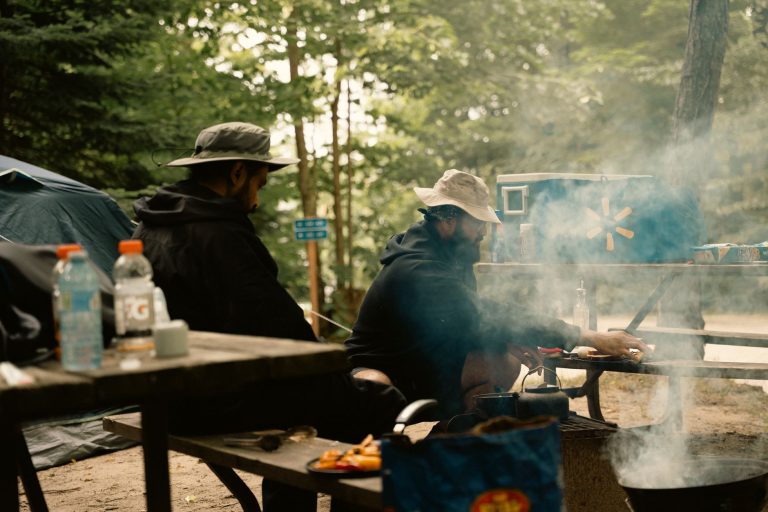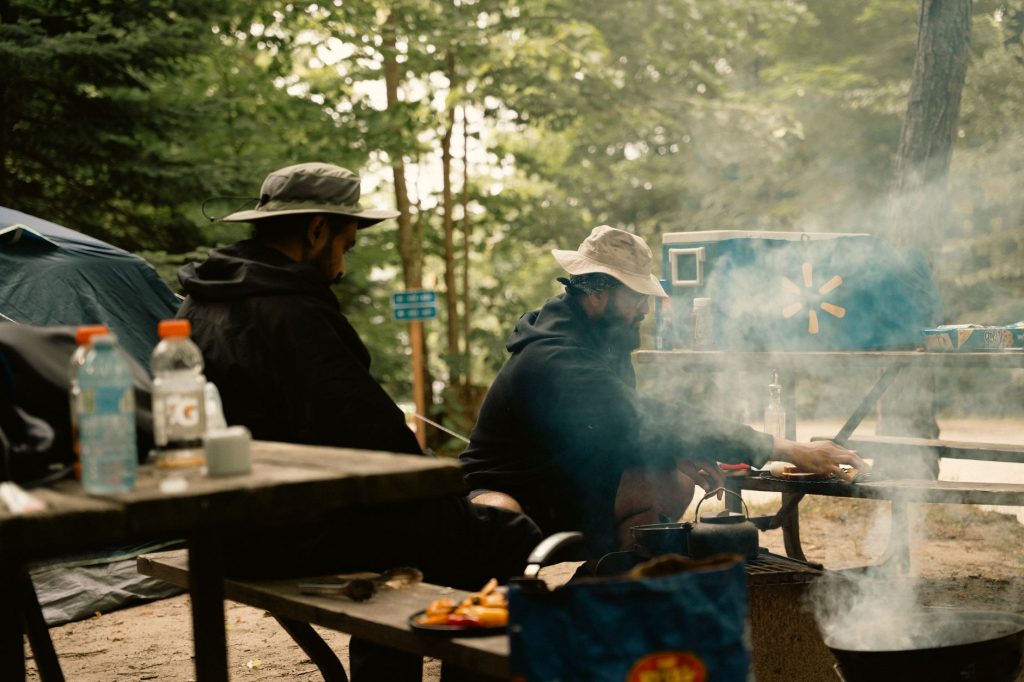
Elkmont Campground sits inside Great Smoky Mountains National Park — not at the edge, not near it, but actually inside the park boundary, about five miles from the Sugarlands Visitor Center off Little River Road. That distinction matters more than it sounds. When the day-trippers funnel back toward Gatlinburg at four in the afternoon, you’re already at your site, watching the Little River slide past over flat river rocks, and the whole place quiets down to something you don’t expect from the most visited national park in the country.
The campground has 220 sites spread across several loops — some closer to the river, some tucked back toward the treeline. The Elkmont A and B loops are the ones most people angle for because of the water access. Sites run $27 to $30 a night depending on the loop, which makes this one of the more affordable ways to actually stay inside the Smokies rather than driving in from Pigeon Forge. Reservations go through Recreation.gov and they fill fast, especially from April through October. If you’re planning a summer weekend, six months out is not too early.
The campground has flush toilets and cold-water spigots but no hookups and no showers — which filters out a certain crowd and keeps the atmosphere closer to actual camping. Sites are roomy enough for a tent and a couple of chairs without being on top of your neighbors. Black bears are present and the food storage rules are enforced; there are bear boxes at each site, so leave the cooler in the car and use them.
What makes Elkmont worth the planning is the access it gives you. The Jakes Creek and Cucumber Gap trails both leave from the campground itself, so you can hike before breakfast without moving the car. Cucumber Gap is a moderate five-mile loop that cuts through old-growth forest and crosses the river twice — it’s not a dramatic summit hike, but it’s genuinely beautiful and usually less crowded than the trails closer to the main park entrances. The trailhead parking stays manageable because most people camping there are already on foot.
There’s also the Elkmont Historic District, a ten-minute walk from the campground, where the ruins of a 1920s summer resort colony are slowly being reclaimed by the forest. The old cottages and the Appalachian Clubhouse are stabilized but not restored — the effect is strange and interesting, especially in the late afternoon when the light comes through the trees at an angle. The National Park Service has interpretive signs up, but it’s the kind of place where you mostly just walk around and look.
Firefly season in late May and early June brings a lottery-only event when synchronous fireflies put on a display in the meadows near the campground — the Park Service manages access separately from regular camping reservations, and demand is intense. But even outside of that window, Elkmont at dusk has a particular quality. The river sounds carry through camp, the temperature drops faster than it does in the valley, and by nine o’clock the sky over the ridge is fully dark.
Getting here from Knoxville takes about an hour on a normal day — take I-40 East to Sevierville, then pick up US-441 south into the park. The campground is open from mid-March through the end of November most years. If you’ve been meaning to actually stay in the Smokies rather than just drive through, Elkmont is the practical answer.