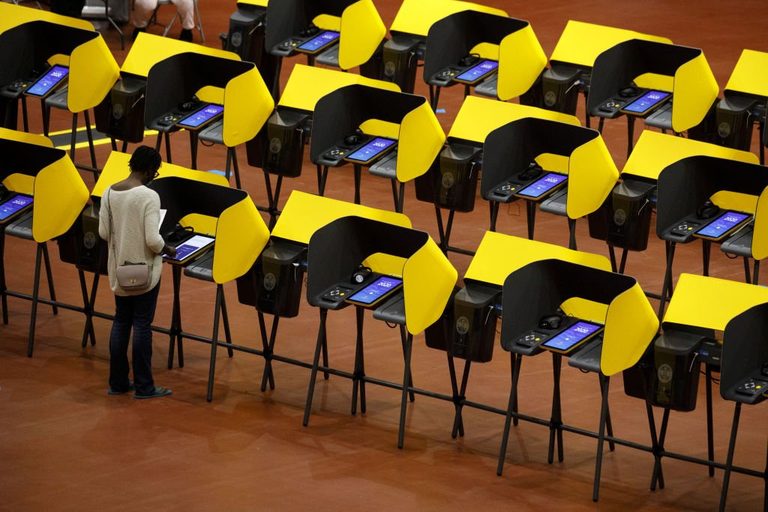
As early voting for the November midterm elections ramps up, voters in several states have taken to social media to share stories of touchscreen voting machines that seemed to select the wrong candidate. In Kansas, Ohio, South Carolina, Tennessee and Texas, some voters described having to tap the screen multiple times or seeing their choice default to the opposite party.
Officials attribute problems to simple mistakes
Election administrators across the country say the vast majority of these reports stem from ordinary user error or a brief screen miscalibration that can be corrected in minutes. “Almost all of the claims of vote flipping are understandable human error,” said David Becker, executive director of the Center for Election Innovation and Research. He likened the experience to a “butt dial” on a phone – an innocent mistake, not a nefarious plot.
In Williamson County, Tennessee, Chad Gray, the county’s election administrator, confirmed that officials have found no discrepancies in the voting equipment. “If problems or questions do arise, people from each party will examine the devices and make sure they are working properly,” he said.
Mark Goins, Tennessee’s elections coordinator, echoed that sentiment, describing the incidents as “unintended touches” rather than a “vote‑flipping situation.” Similarly, Staci Decker, elections administrator for Kendall County, Texas, explained that a voter tapping the wrong part of the screen or pressing too hard can cause a temporary miscalibration, which staff routinely correct by recalibrating the screens every few days.
Social media amplifies isolated incidents
Stories of touchscreen glitches have garnered tens of thousands of likes, shares and comments, especially in high‑population areas such as Williamson and Davidson counties in Tennessee. Stella Parton, sister of the late country singer Dolly Parton, posted that she had to correct her vote three times because the machine kept defaulting to Republican Sen. Marsha Blackburn. She urged fellow voters to persist, saying, “Do it anyway. Don’t let them rig this election.”
Other users reported similar frustrations, such as a Texas voter who had to tap forcefully to register a choice for Democrat James Talarico over Republican Ken Paxton. County officials responded that these could also be user‑error cases and advised voters to alert poll workers if a printed ballot does not match their intended selections.
Election safeguards remain robust
Across the nation, election officials emphasize that touchscreen voting machines are tested before each election and that most jurisdictions conduct post‑election audits, including manual hand counts of a sample of paper ballots. Kristin Miles, president of the Texas Association of County Election Officials, noted that “nearly every case comes back to the screen calibration on older touchscreen machines, not a change to anyone’s vote.”
Katina Granger, senior manager of public relations for Election Systems & Software, the company that supplies many of the ExpressVote devices, said the firm works closely with election officials and has not been made aware of any widespread equipment issues this cycle. She urged voters who encounter difficulties to seek assistance from poll workers and to notify staff before casting a ballot so proper procedures can be followed.
Poll shows partisan perception gap
An AP‑NORC poll cited in the original report indicates that many Democrats have lost trust in election results over the past four years, with concerns that the president may be interfering. While the poll reflects a partisan perception gap, officials stress that the voting process remains decentralized and resilient. Thousands of local jurisdictions, each with its own rules, make it exceedingly difficult for any coordinated fraud to occur.
In short, while isolated touchscreen hiccups can be frustrating, election administrators assure voters that these are technical glitches that are quickly corrected and do not constitute evidence of a partisan rigging scheme.
Original reporting: NBC10 Boston — read the source article.