Early on a Saturday in October, when the air still carries a little bite and the sun hasn’t crested the ridgeline yet, the Aztec Cave Trail parking area off Transmountain Road is already half-full. That’s your first clue this isn’t some random scramble up a hill. People who know El Paso’s west side know this trail, and they show up early on purpose.
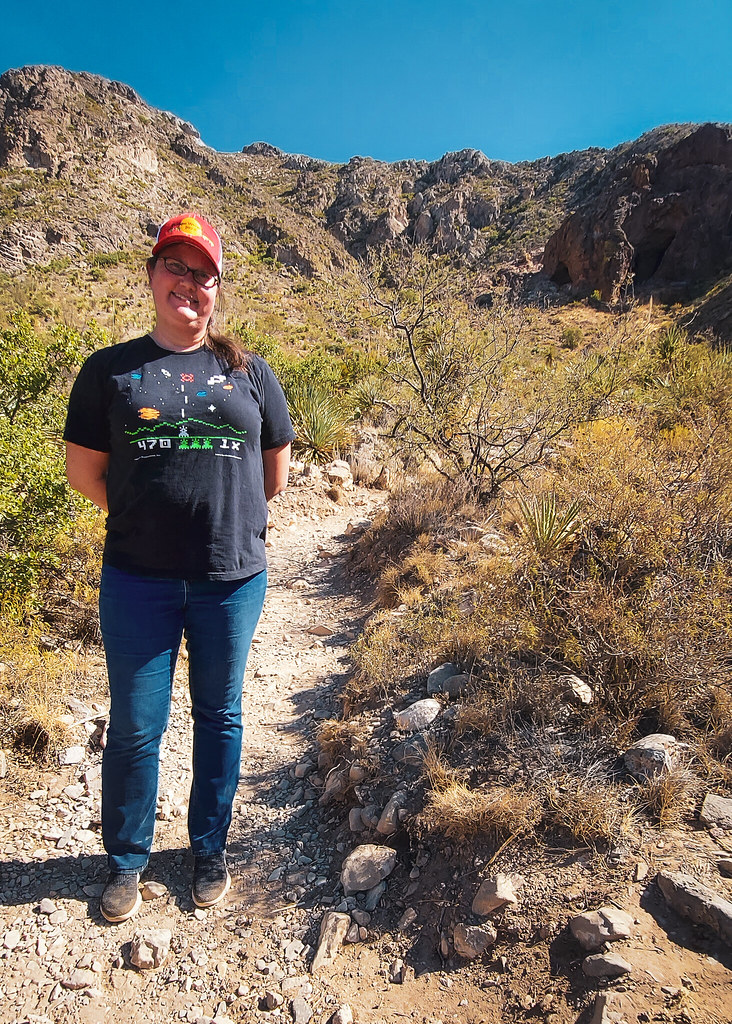
The trailhead sits on the north side of Loop 375, a short drive west from the US-54 interchange. From the moment you step onto the dirt, you’re climbing. The trail runs roughly 1.4 miles round trip, which sounds easy until you realize most of that distance is vertical — a relentless series of switchbacks over loose limestone and exposed rock that gains around 400 feet in elevation. My legs reminded me of this the first time I went up unprepared in trail-runners with no ankle support. Do yourself a favor and wear something with grip.
The payoff at the top is the cave itself — actually a shallow rock shelter carved into the Franklins by centuries of wind and water. It’s not some cramped slot you squeeze into; the overhang opens wide enough to stand under and look south across the entire El Paso basin, Ciudad Juárez spreading out on the other side of the Rio Grande. On a clear morning, which is most mornings here, you can trace the river’s path and watch freight trucks crawl along I-10 far below like toys. It stops conversations. I’ve been up there half a dozen times and it does it every single time.
The cave itself shows old pictographs — faded but visible if you’re looking — which is why the area carries some archaeological sensitivity. The signs ask you not to touch the walls, and honestly, that’s not a hard rule to follow once you’re standing in front of them. Someone was here a very long time ago. That registers differently when you’re also looking at a sprawling desert city below.
A day-use fee gets you into Franklin Mountains State Park: it’s $7 per person for adults, free for kids 12 and under, and you can pay at the self-service kiosks near the trailhead. No reservations needed for the trail itself, though weekend mornings fill fast between October and March. Summer is a different story — I’d skip the Aztec Cave hike from June through early September unless you’re heading out before 7 a.m. and carrying more water than you think you’ll need. The exposed limestone reflects heat in ways that will genuinely surprise you.
I usually bring about 1.5 liters of water for a round trip, a light layer for the top when it’s windy, and nothing else. The trail is well-marked and not technical — I’ve seen families with older kids do it fine — but it demands your attention on the descent, when loose rock becomes a real variable. Trekking poles help if you have them.
There are longer routes in the Franklins that cover more ground and bigger elevation swings, but the Aztec Cave Trail does something specific: it gives you a genuine physical effort, a piece of the city’s deep past, and one of the cleanest views in West Texas, all in under two hours. For a lot of El Pasoans I know, it’s the trail they come back to most — not because it’s the hardest or the longest, but because it reliably delivers exactly what you came for.