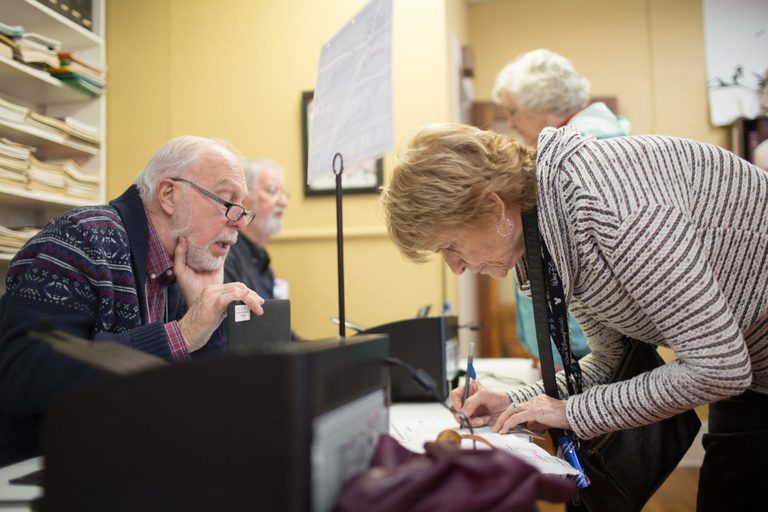
Across North Carolina, election directors are reporting a dramatic rise in early‑voting participation as the 2026 midterm cycle gets underway. In Wake County, Director Olivia McCall said early‑voting turnout is already 70% higher than it was at the same point in the 2022 election, calling the increase “unprecedented.” While it is still early to predict whether the overall turnout will break records, the trend is clear: more voters are casting ballots before Election Day.
County‑by‑county snapshot
Mecklenburg County saw a roughly 45% jump in early‑voting numbers, according to Director Michael Dickerson, who expects a lighter day at the polls on Election Day as a result. In Cabarrus County, Director Carol Soles described the rise as “significant,” and Buncombe County reported a near‑60% increase over 2022 and a 23% jump from the 2018 record.
Jackson County’s early‑voting numbers topped 15% by Friday, Oct. 23. “Everyone seems to be steady,” said Director Amanda Allen, noting that while the turnout isn’t at the level of a presidential election, the consistency across sites is encouraging.
Early‑voting versus absentee voting
State Board of Elections data shows that through the second Sunday of early voting, 20.1% of registered voters have cast ballots, up from 15.7% in the same period in 2022. At the same time, absentee voting has fallen 34% statewide. Buncombe County recorded only 6,700 absentee ballot requests this cycle, compared with about 7,500 returned ballots in 2022.
Election Director Corinne Duncan of Buncombe County linked the decline to a post‑COVID shift away from mail‑in voting. “2020 was gigantic,” she said, noting that the pandemic sparked a surge in absentee use that has since tapered.
New ballot‑handling guidance
North Carolina’s State Board of Elections recently tightened its guidance on how absentee ballots must be sealed. Previously, a ballot could be counted if the inner envelope was sealed, even if the outer envelope was not. Under the new rule, any unsealed envelope—inner or outer—requires the ballot to be spoiled and reissued.
As a result, Wake County has spoiled 277 absentee ballots (3.5% of the total), with 147 of those due to the new sealing requirement. Mecklenburg County reported 260 spoiled ballots for similar reasons, and Buncombe County noted 24 such cases. Smaller counties indicated the impact has been minimal.
Early‑voting site changes and political pressure
Following the 2025 shift of election boards from majority Democratic to majority Republican, many counties adjusted early‑voting locations and hours. Some eliminated Sunday voting, moved weekend hours to Saturdays, and relocated sites to accommodate new logistics.
State auditor-appointed liaison Dallas Woodhouse, hired to coordinate with local boards, resigned after allegations that he pressured officials to adopt particular early‑voting plans. In Jackson County, Republican board member Jay Pavey alleged pressure from “Raleigh” to drop a Western Carolina University site, though the board ultimately voted 3‑1 to retain it, with Republican chair Bill Thompson favoring an alternative location.
University campuses and student turnout
Student activism has also shaped early‑voting decisions. At Western Carolina University, a new site at the Health and Human Services building attracted 1,200 voters in its first week, compared with 448 at the same site in 2022. Meanwhile, students at North Carolina A&T and UNC‑Greensboro marched to the nearest polling place after their requests for on‑campus sites were denied, voting at a newly suggested Union Square location.
Election Director Charlie Collicutt reported 369 votes at Union Square on a recent Thursday, including nearly 100 same‑day registrations and 47 address changes, underscoring the importance of accessible sites for student voters.
President Trump’s stance
President Donald Trump has repeatedly called for reforms to the mail‑in voting process, arguing that stricter rules protect election integrity. While his proposals have not yet altered North Carolina’s current guidance, the administration’s emphasis on secure voting aligns with the state’s recent tightening of absentee‑ballot handling.
Overall, the surge in early‑voting participation reflects growing voter engagement in North Carolina’s midterm contests, even as absentee voting adjusts to new procedural safeguards.
Original reporting: Carolina Public Press — read the source article.