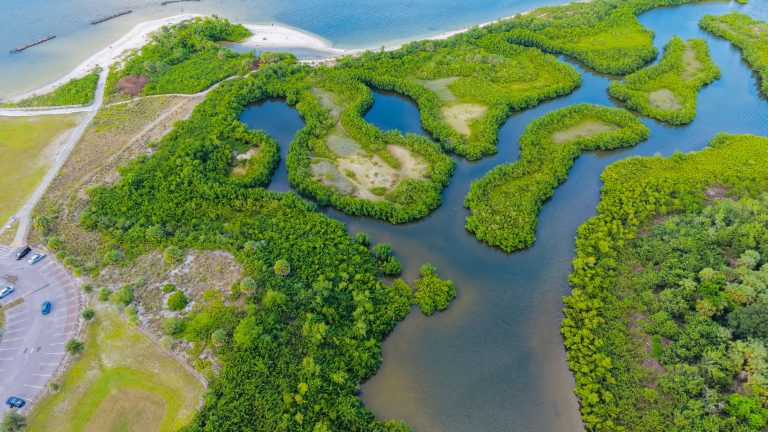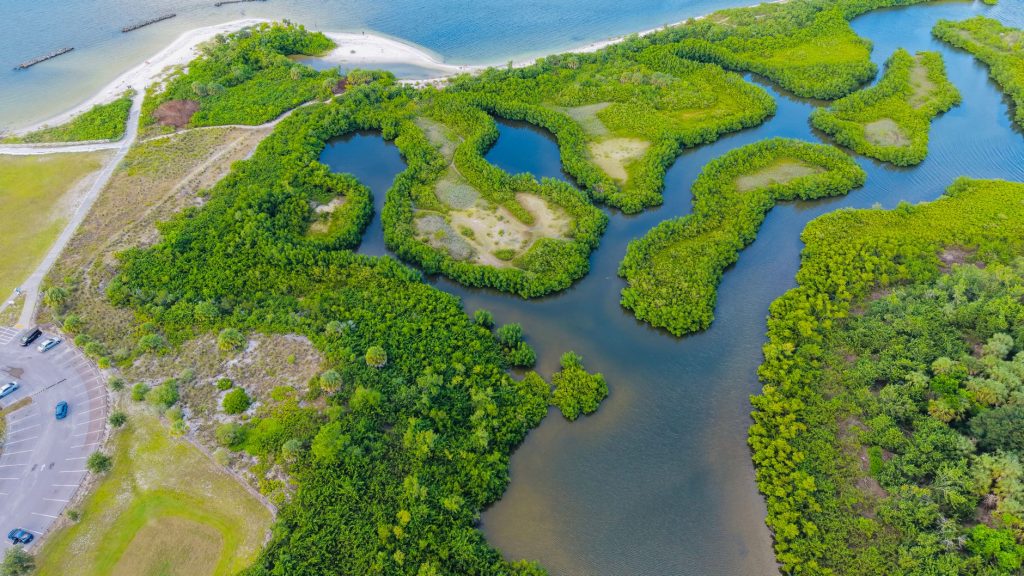
You pull away from the Tarpon Springs boat ramp around four in the afternoon, the Gulf water still glassy and pale green in the late light. Anclote Key sits about three miles offshore — close enough to see on a clear day, far enough that most people never bother. That distance is exactly the point.
The island runs about four miles long and maybe a quarter-mile wide at its broadest. No bridges, no road access, no concession stand, no ranger station you can walk into. The only structure that matters is the old lighthouse at the southern end, built in 1887, whitewashed and still standing, though it hasn’t been active for decades. You can walk to it along a sandy path that cuts through scrubby palmetto and sea oats. It takes maybe twenty minutes from wherever you anchor or beach your boat. The lighthouse itself is not open to climb — the door stays locked — but standing next to it while the sun drops toward the water is enough.
The beach on the Gulf side is wide and mostly shell-covered, the kind that crunches underfoot. Bring water shoes or accept that your feet will take a beating. What you’ll find in the shells depends on the season and recent storms: lightning whelks, angel wings, sundials if you’re lucky. Nobody’s going to stop you from collecting reasonable amounts, and the picking is genuinely better here than on any accessible beach in Pinellas County because fewer people have worked it over.
Shorebirds are dense near the southern tip, especially from late fall through spring. Brown pelicans, roseate spoonbills, oystercatchers, the occasional reddish egret doing that strange wings-out sprint across shallow water. If you have binoculars, bring them. If you don’t, you’ll still see plenty — the birds here are not especially skittish because foot traffic stays low.
Getting there is the main logistical question. You need a boat, a kayak, or a ferry. The ferry is the easiest option: Captain Jim’s or similar outfits run trips from the Tarpon Springs area, usually by reservation, often landing passengers for a few hours before heading back. Prices run roughly $35–$55 per person depending on the operator and the season. If you have your own vessel, there’s a designated anchorage on the east side of the island; dinghies can beach on the Gulf side during calm conditions. Kayaking from the mainland is possible but requires a solid fitness level and a close eye on wind and current — this is not a casual paddle.
There are primitive campsites on the island, maintained by Florida State Parks, and they fill up fast for winter weekends. Permits run around $22 a night and need to be reserved well in advance through the ReserveAmerica system. Camping here in January, with a fire ring and the lighthouse at the end of the path, is one of the quieter things you can do in the entire Tampa Bay region.
By the time you’re heading back across the water, the sky over the Gulf has usually gone pink and orange in the way that makes you feel briefly sorry for people who live inland. Anclote Key doesn’t offer much in the way of amenities, and that’s the whole appeal. Pack your own food, your own water, your own sunscreen. The island handles the rest.