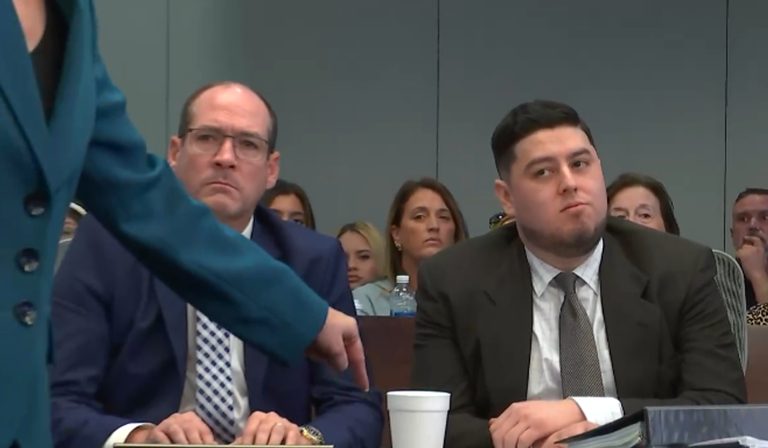
Durham County attorneys representing Miguel Salguero‑Olivares, the man convicted of murdering UNC student Faith Hedgepeth, filed a Motion for Appropriate Relief on Tuesday. The filing lists four specific grounds for seeking a new trial and asks the court to vacate the judgments entered on October 23, 2026.
Undisclosed lab report on alleged drug evidence
The defense argues that the State failed to turn over a crime‑lab report that cleared Salguero‑Olivares of the felony drug charges that were pending during the trial. According to the motion, a lotion bottle seized in May 2025 was initially reported positive for methamphetamine, leading to additional charges of possession and intent to distribute. The defense says they repeatedly requested further testing, but the State did not submit the bottle for analysis until August 2026. A lab report dated October 20, 2026 indicated the bottle did not contain a controlled substance. The attorneys claim they learned of the report only on October 26, after the jury had returned a guilty verdict and sentencing had been imposed. They contend the State’s nondisclosure prejudiced Salguero‑Olivares’ right to present a full defense.
Challenge to SBI Agent Justin Heinrich’s testimony
During the trial, Special Agent in Charge Justin Heinrich of the State Bureau of Investigation testified about a violent sexual assault and the consistency of witness Karena Rosario. The defense objected to portions of his testimony, arguing that the court improperly admitted opinion testimony from an agent who was not qualified as an expert on the subject matter. The motion asserts that allowing Heinrich’s statements violated the law and undermined the fairness of the proceedings.
Questionable identification of a cookout witness
State witness Luis Lopez testified that a man named Abel invited a friend to a cookout near the location where Hedgepeth parked her car. Lopez said the man could be identified as Salguero‑Olivares. However, five days before jury selection, Abel Guevara‑Gudiel met with prosecutors and told them he never met the defendant, suggesting the only possible attendee was a deceased former coworker from Mexico. The defense argues the State’s claim that Abel had fled to Guatemala created a false impression and that the court should hold an evidentiary hearing on what the State actually knew about Guevara‑Gudiel’s whereabouts.
Disputed time‑of‑death evidence
The final ground cited in the motion concerns the forensic determination of Hedgepeth’s time of death. In 2012, forensic specialist Paul Glover estimated her blood‑alcohol concentration would have been 0.020 g/100 mL at autopsy, placing her death at 2:51 a.m. The State moved to exclude Glover’s calculation during pre‑trial hearings in July 2026, arguing the underlying facts were insufficient. The court granted the State’s motion, and Glover later reaffirmed his opinion at an August hearing. The defense also objected to Dr. Lauren Scott’s autopsy report, which suggested Hedgepeth was last seen alive sleeping in her apartment at 4:00 a.m.; that objection was overruled. The motion claims the exclusion of Glover’s opinion was contrary to law.
Requested relief
The filing asks the court to vacate all convictions and grant a new trial. It also seeks an evidentiary hearing on the four issues raised and directs the State to produce all communications and records related to the crime‑lab report between August and October 2026, as well as any recordings or notes from the interview with Abel Guevara‑Gudiel.
While the case remains under review, the defense maintains that the undisclosed evidence and procedural errors denied Salguero‑Olivares a fair trial, and they are prepared to argue these points before the court.
Original reporting: WRAL Raleigh — read the source article.