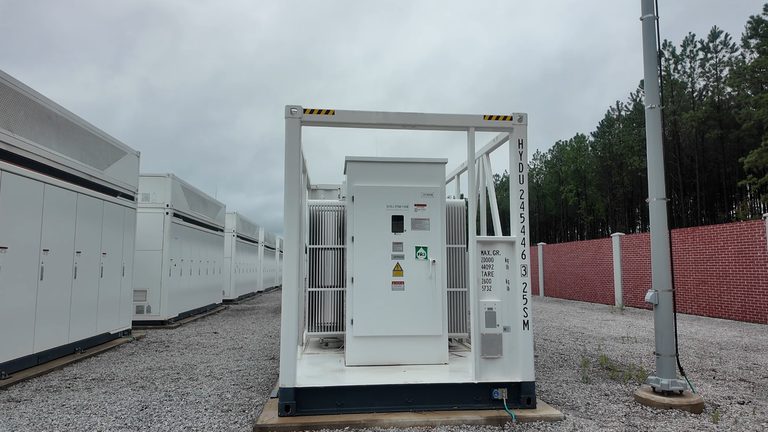
Duke Energy disclosed on November 17 that it will spend up to $756 million to build two large battery storage facilities adjacent to its H.F. Lee natural‑gas plant in Goldsboro, Wayne County. The combined capacity of 410 megawatts will more than double the utility’s battery footprint in North Carolina, which currently stands at 308 megawatts across 14 sites.
How the batteries work for consumers
Unlike traditional power plants, the batteries do not generate electricity. They store excess energy—particularly surplus solar generated on sunny afternoons—and release it during peak demand periods, such as cold winter mornings before sunrise. By shifting energy use in this way, Duke Energy says it can avoid purchasing costly power from neighboring utilities or running less efficient generators, which should help keep fuel costs down and, ultimately, lower electricity bills for ratepayers.
Financial incentives and local benefits
The Wayne County projects qualify for a 50 percent federal tax credit because they are located in an “energy community” and use domestically produced components. Duke Energy also emphasized that the sites are former coal‑plant locations, which already have land and transmission infrastructure, reducing the need for new construction and preserving valuable community space.
According to the utility, the new facilities could generate up to $2 million in additional annual property tax revenue for Wayne County, on top of the roughly $5.8 million the company already pays each year for its existing infrastructure. The projects are expected to create nine permanent jobs to operate and maintain the batteries and related solar assets.
Timeline and future expansion
Construction is slated to begin in early 2027. The first facility, with 260 megawatts of capacity, aims to be operational by fall 2028, followed by a second 150‑megawatt installation later that year. Duke Energy also announced plans to expand battery storage at the former Allen coal plant near Charlotte, targeting about 400 megawatts of storage by late 2028, with the first 50‑megawatt unit already serving customers.
State energy plan context
The projects come one day after the North Carolina Utilities Commission approved Duke Energy’s updated long‑term energy plan, which calls for major investments in natural gas, solar power, battery storage and potential new nuclear generation. The plan’s Carbon and Integrated Resource Plans project up to 5,400 megawatts of battery storage across the Carolinas system by 2034, including 2,700 megawatts of new storage beyond previously approved projects.
Critics and considerations
Environmental advocates have raised concerns about the continued reliance on natural‑gas generation within the plan, arguing that greater investment in renewable energy and energy‑efficiency measures could further reduce costs for consumers. While batteries can make solar power more flexible, critics note that they must be charged with electricity generated elsewhere and cannot fully replace the functions of conventional power plants.
Nevertheless, Duke Energy’s spokesperson Bill Norton emphasized that the battery projects are a key part of the company’s strategy to increase renewable integration, lower operating costs and provide a more resilient grid for North Carolina residents.
What this means for ratepayers
As electricity demand continues to rise across the state, the new storage capacity offers a tool for utilities to better manage supply without resorting to expensive peak‑generation sources. While the utility has not provided a precise estimate of how much the Wayne County projects will reduce individual electricity bills, the combination of federal tax credits, reduced fuel purchases and local tax benefits suggests a positive financial impact for both customers and the broader community.
Original reporting: WRAL Raleigh — read the source article.