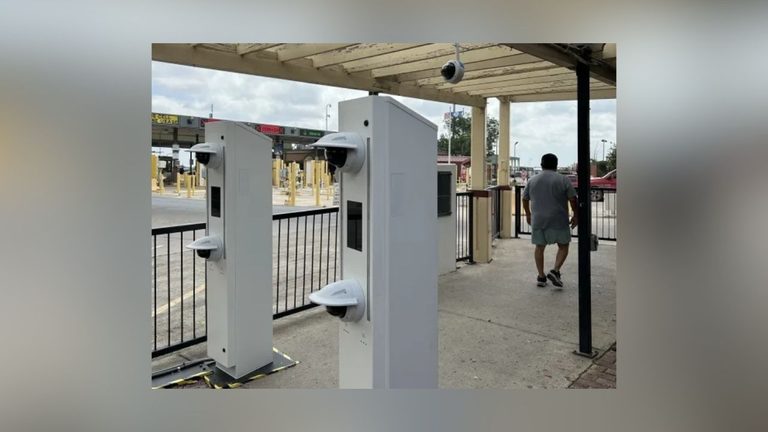
The Department of Homeland Security’s Science and Technology Directorate (S&T) moved from the lab to the border this spring, testing cutting‑edge facial‑biometric systems at the Progreso International Bridge in Texas. The pilot, carried out in May, was designed to see whether AI‑powered cameras could reliably capture facial images of pedestrians walking out of the United States and match them against the Customs and Border Protection (CBP) Traveler Verification Service.
Why the test matters for Texas and the nation
CBP asked S&T in October 2025 to find a secure, efficient, and accurate way to verify pedestrian departures using biometrics. The agency already uses biometric verification for inbound travelers at Progreso, but an exit‑verification system would close a long‑standing gap in border security and help meet congressional requirements that the Trump administration has highlighted as a priority.
Industry partners and the testing process
S&T partnered with six vendors under Cooperative Research and Development Agreements, allowing the companies to cover their own costs while supplying data for government decision‑making. After initial capability demos at the Maryland Test Facility, three solutions were chosen for the field trial: two from NEC National Security Systems and a joint offering from Paravision and AiFi.
Before heading to the bridge, S&T built a replica of the pedestrian exit environment at the Maryland facility so vendors could install and fine‑tune their prototypes. At Progreso, the partners mounted cameras on poles at varying heights to accommodate travelers of different statures. The AI system created a three‑dimensional digital model of the capture zone, tracked movement, and evaluated whether the facial images were suitable for matching.
Real‑world conditions tested
The trial accounted for everyday variables such as walking speed, hats, sunglasses, and umbrellas. Teams also ran after‑dark tests, using external lighting and different camera angles to see if the technology could perform reliably at night. Signage in English and Spanish informed pedestrians that U.S. citizens could opt out of biometric exit collection if they did not wish to have their picture taken; the mandate applies to non‑U.S. citizen travelers.
Officials praise the results
“It is one thing for a technology to work in a lab like MdTF, but it is significantly more difficult when the tech is deployed operationally at the border. At Progreso, it had to work with limited infrastructure, in a challenging environment, and do it autonomously,” said Dr. Cameron Whitelam, director of S&T’s Biometric, Identity, and Advanced Computing Division. “And it did just that.”
Arun Vemury, S&T senior advisor for biometrics and identity, noted that the demonstration helps CBP meet long‑standing legislative requirements and aligns with the administration’s priorities for stronger border security. Larry Panetta, director of CBP’s Biometrics Program Office, added that the image‑capture capabilities exceeded expectations in both daylight and nighttime conditions and could serve as a force multiplier for the agency.
Looking ahead
Panetta called the rapid progression—from concept to operational data collection in just a few months—“amazing,” and expressed optimism about future collaborations between CBP and S&T. If the technology proves scalable, it could be rolled out to other high‑traffic pedestrian crossings along the U.S.–Mexico border, enhancing the nation’s ability to monitor lawful exits while respecting privacy safeguards.
For Texas residents and travelers, the test underscores a growing commitment by the federal government to leverage modern technology in support of secure, efficient border operations that protect families and communities.
Original reporting: WBAP News/Talk (Dallas-Fort Worth) — read the source article.