American Coney Island has been on Lafayette Boulevard since 1917, which makes it older than the Lodge Freeway, older than most of the buildings still standing downtown, and old enough that its current owners are the fourth generation of the Keros family to run it. That’s not a footnote — it’s the whole point of the place.
The menu hasn’t changed in any meaningful way in decades. A coney dog here is a natural-casing frankfurter in a steamed bun, topped with a thin, beanless meat chili, yellow mustard, and a pile of chopped raw onion. That’s it. Order it any other way and the counterperson will look at you briefly, then write it down without ceremony. A single dog runs around $3.50. Most people order three.
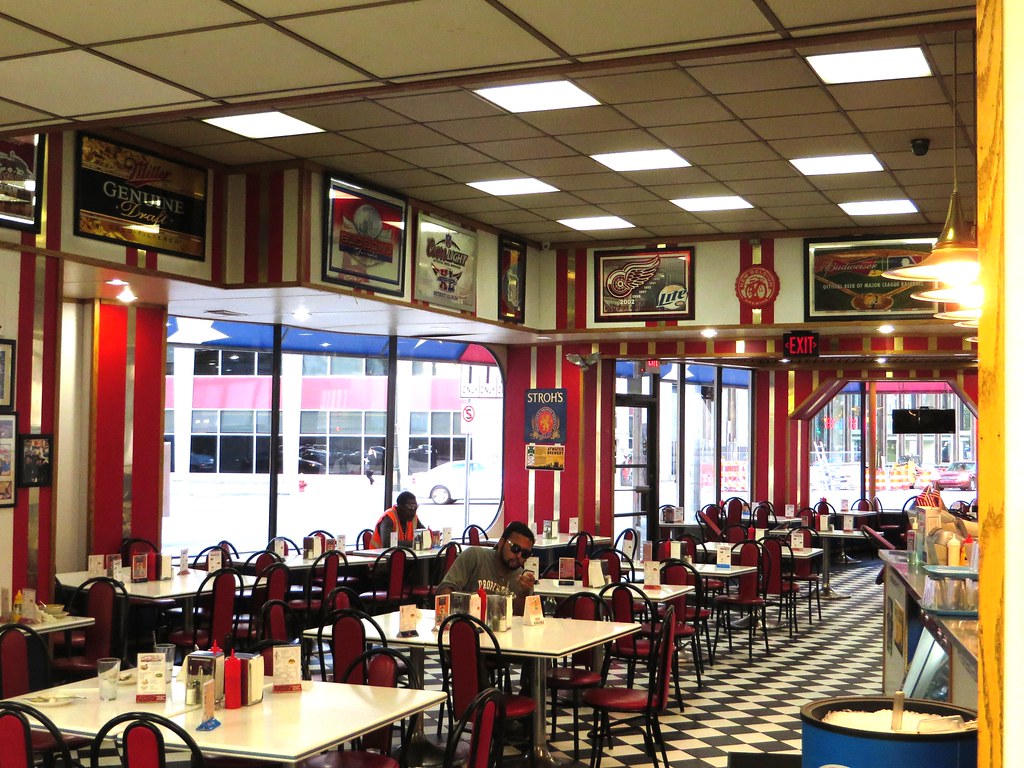
The room is small, loud, and lit like a break room. Stools at the counter, a few booths along the wall, and a kitchen that has no interest in being open-concept. At lunch on a weekday, the crowd runs from courthouse workers to construction crews to tourists who read about the Detroit coney debate and decided to settle it themselves. At 2 a.m. on a weekend, the crowd is entirely different and equally committed. American Coney Island is open 24 hours, every day, and the chili is always the same temperature and always the right one.
A word on the geography: American Coney Island sits directly next to Lafayette Coney Island, its one-time sibling operation that split off in the 1920s and has been operating independently ever since. The two establishments share a wall and a century-old rivalry that locals treat with varying degrees of seriousness. Both are worth trying. Most people have a preference and keep it. The debate is not really about the food — the chili recipes are close enough that only a partisan would insist otherwise — and more about loyalty, habit, and where your parents took you first.
Beyond the dogs, American serves chili mac (chili over spaghetti, topped with shredded cheddar), burgers, eggs, and breakfast plates around the clock. The coffee is diner coffee. The chili cheese fries are better than they need to be. Nothing costs much — a full meal for two, including drinks, typically comes in under $20.
What makes American Coney Island worth a specific trip rather than just a stop: it’s one of the few places in Detroit that feels genuinely continuous with the city’s industrial-era past without being curated around that fact. There’s no reclaimed wood, no menu explaining sourcing, no playlist. The fluorescent lights have been on since before anyone working there was born. The Keros family still shows up. The chili still comes out of the same recipe.
Parking downtown is metered and available on nearby streets; the People Mover’s Financial District station is a short walk. American Coney Island is at 114 W. Lafayette Blvd. Cash and card both work. Getting there early on a weekend avoids the longest waits, but the line moves faster than it looks.