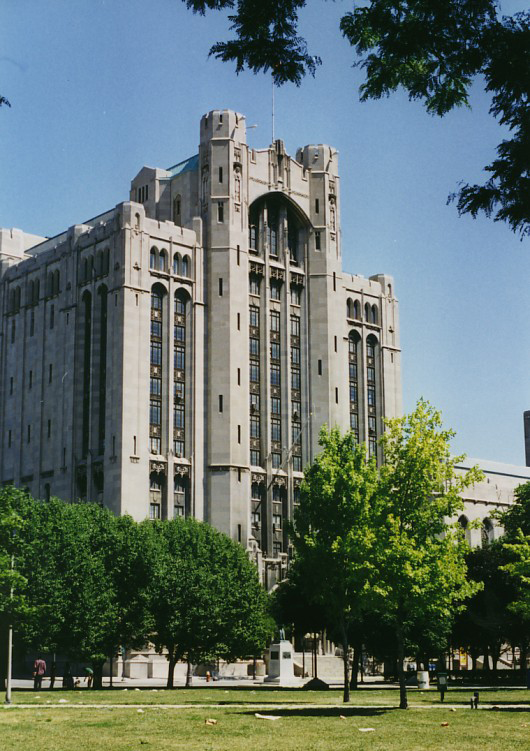
There are buildings you visit, and then there are buildings that visit you — ones that take up permanent residence in your imagination long after you have walked back out into the afternoon light. The Detroit Masonic Temple, rising up from Cass Avenue in the Cass Corridor neighborhood, is emphatically the latter. It is the largest Masonic temple in the world, and the moment you step inside, that superlative stops feeling like a trivia footnote and starts feeling like an understatement.
Built in 1926 and designed by architect George D. Mason, this colossal Gothic Revival structure covers nearly a full city block and contains more than 1,000 rooms spread across its many floors. That number alone should tell you something. This is not a historic building that has been roped off and quietly preserved behind velvet barriers. It is alive. Concerts, theater performances, boxing matches, private events, tours — the Temple hums with activity nearly every week of the year, and that energy makes exploring it feel like discovering something genuinely in motion rather than frozen in amber.
The Great Auditorium, which seats around 4,500 people, is where many visitors first lose their footing a little. The sheer scale of the room — the vaulted ceiling, the ornate ironwork, the balconies stacked above balconies — stops you mid-sentence. Bands like Jack White, Arcade Fire, and countless others have performed here, and the acoustics match the grandeur of the room. Catching a live show inside the Masonic Temple is one of those experiences that makes you want to grab people by the sleeve and tell them to drop whatever they are planning next weekend.
Beyond the main auditorium, guided tours take you through spaces that most visitors never know exist: lodge rooms decorated in elaborate Egyptian, Gothic, and Renaissance Revival motifs, a full theater, a ballroom with a sprung hardwood floor, and corridors that seem to stretch on forever. Every room tells a different story, and the guides here are knowledgeable and genuinely enthusiastic — they clearly love this building, and that passion is contagious.
There is also a layer of local legend woven into the Temple’s history. Jack White, a Detroit native, once reportedly helped pay the building’s back taxes to keep it from closing. Whether you take that story as pure fact or city mythology, it says something meaningful about how deeply Detroiters feel connected to this place.
Plan to arrive with time to spare before any event so you can wander the public spaces and let the architecture sink in. Parking is available nearby, and the Temple is easily walkable from Midtown. Ticket prices vary by event, and guided tours are offered periodically — check the Temple’s official website for the current schedule. Whatever brings you through the doors, you will leave already thinking about your next visit.