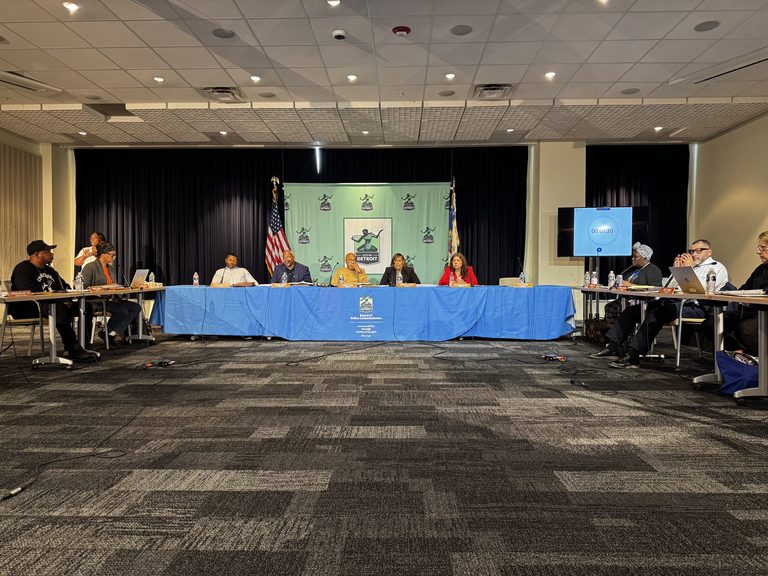
Detroit’s Board of Police Commissioners (BOPC) announced Thursday that its investigators can once again log in directly to raw body‑camera and dashboard‑camera footage. The change reverses a May 15 policy shift that forced the board to request footage through the police department, often receiving heavily redacted files.
Why the restriction mattered
Since the board’s creation in 1974, its investigators have been able to independently retrieve video evidence to examine non‑criminal citizen complaints against the Detroit Police Department (DPD). The spring restriction meant they had to submit formal requests, wait for officers to scrub any potentially sensitive data, and then receive only partial clips. Board members said the new process slowed investigations and added to an already massive backlog of more than 2,000 open complaints on the Police Accountability Dashboard.
Chief Bettison’s role
Police Chief Todd Bettison, who initially ordered the access to be revoked, said he restored it after receiving conflicting guidance about who held authority over the process. “Then it was told to me that I had the decision, and it was on me whether or not I would restore it or not,” Bettison told commissioners. He declined to comment further when pressed for details about the original direction.
Official explanations
Board officials and a June statement from commissioners cited compliance concerns with the FBI’s Criminal Justice Information Services (CJIS) policies. CJIS governs how agencies handle sensitive criminal‑justice data, and the FBI, along with the Michigan Commission on Law Enforcement Standards (MCOLES) and the Michigan State Police (MSP), were said to have raised questions about the board’s direct access to systems that store such data.
MSP clarified that it does not have statutory authority over the board’s access and that the decision to limit access rested with the FBI’s CJIS Division. The FBI’s own statement confirmed it did not direct the Detroit board’s access, noting the matter falls outside the scope of its CJIS responsibilities.
Board’s response
Jerome Warfield, the board’s chief investigator, called the original restriction a “muddled mess” and likened it to asking a prosecutor to provide proof of a crime to the accused. “That’s how ludicrous this is to me; that we’re asking the ones who are being accused to send us evidence that they are in control of,” Warfield said.
Warfield emphasized that OCI investigators are CJIS‑certified and undergo extensive background checks, but the lack of direct access forced multiple rounds of communication with DPD officers, sometimes resulting in delayed or incomplete footage.
What remains unresolved
While the board celebrates the restoration of direct access as a step forward for transparency, Warfield noted that investigators still lack entry to several systems and reports they previously accessed. Commissioners expressed concern that without clear safeguards, future restrictions could be re‑imposed.
District 3 Commissioner Darious Morris, who was not present at the meeting, warned that the earlier limitations “kill[ed] transparency” and weakened the board’s ability to hold officers accountable.
Looking ahead
The board plans to work with DPD, state agencies, and federal partners to develop a compliant yet functional access protocol. If successful, the city could set a model for other municipalities seeking to balance privacy safeguards with robust civilian oversight.
Original reporting: BridgeDetroit — read the source article.