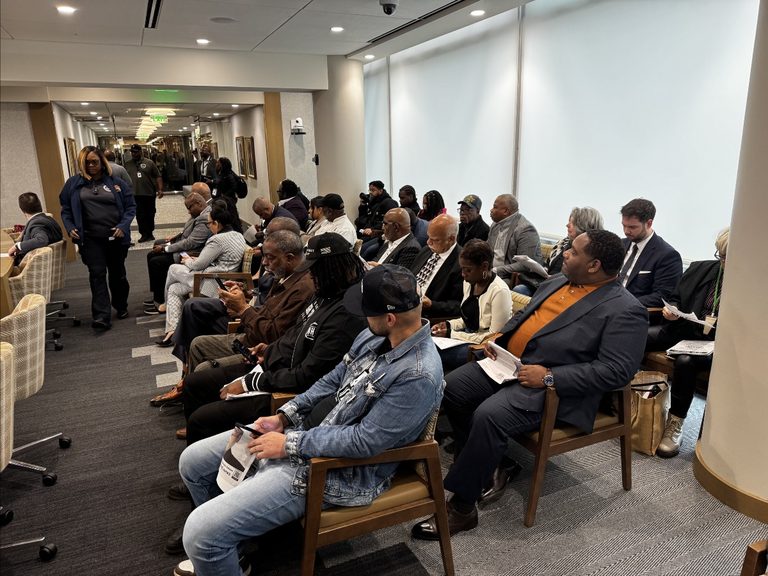
Detroit’s Planning and Economic Development Committee approved a fast‑track package that will soon be considered by the full City Council. The proposal centers on a $2.2 billion overhaul of the Renaissance Center and the adjacent East Riverfront, a project championed by developer Bedrock and General Motors.
Key items on the agenda
The council will decide on two critical components:
- A tax‑incentive package that Bedrock and General Motors say is essential for the redevelopment. The package totals $548 million in public subsidies.
- A historic $133 million Community Benefits Agreement (CBA) that the Neighborhood Advisory Council approved two weeks ago.
Both items could be approved as early as tomorrow, though Committee Chair Latisha Johnson warned that discussion will likely continue into the full council session on Tuesday.
Council votes and timeline
Committee Chair Latisha Johnson and President Pro Tem Coleman A. Young II voted to move the proposals to the Tuesday session. Council Member Gabriela Santiago‑Romero cast a dissenting vote. With a subcommittee meeting scheduled before the winter recess, the council could finalize the measures before November 25.
Community concerns
Critics have repeatedly questioned the speed of the process. Residents, advocacy groups, and even Council Member Santiago‑Romero have voiced worries that the rapid timeline limits public input. Developers argue that an early council approval is needed to secure state tax breaks from the Michigan Strategic Fund.
How residents can get involved
All items are now officially before council members, and citizens are encouraged to contact their representatives directly. The council’s public comment period remains open, and the agenda and attendance information are available online.
Additionally, Council Member Mary Waters is hosting a RenCen Community Meeting tonight, November 16, from 5 p.m. to 7 p.m. at the Coleman A. Young Community Center, 2751 Robert Bradby Dr. Residents may also attend virtually after registering.
Background on the redevelopment
The $2.2 billion project aims to revitalize Detroit’s iconic skyline and create new jobs, housing, and public spaces along the riverfront. Supporters say the investment will boost the city’s economy and attract further private capital. Opponents caution that the large public subsidy must be balanced with tangible benefits for local neighborhoods.
For those who cannot attend the live council sessions, recordings are posted on the city’s website.
Original reporting: BridgeDetroit — read the source article.