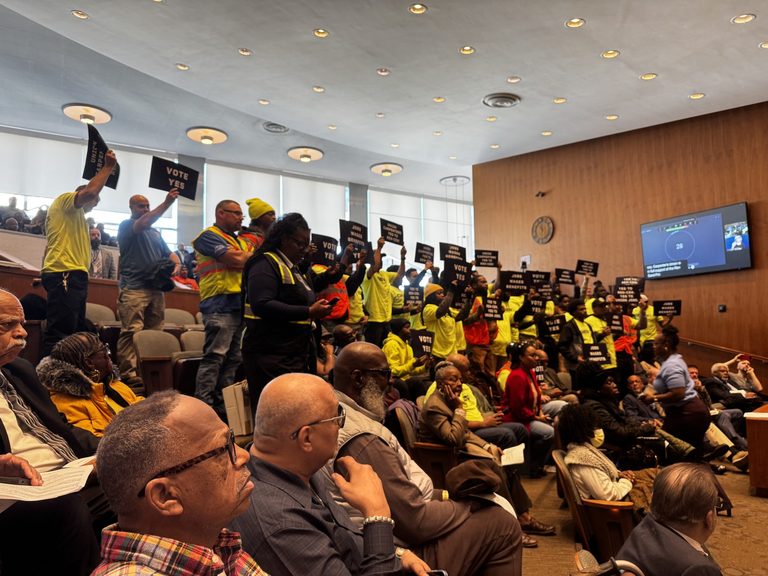
Detroit City Council gave the green light Tuesday to a sweeping $2.2 billion redevelopment of the Renaissance Center (RenCen) and adjacent East Riverfront. The vote, 7‑2, approved roughly $473 million in tax incentives and an unprecedented $133.3 million in community‑benefit commitments, while the Downtown Development Authority pledged an additional $75 million in cash.
Council leaders champion jobs and family‑friendly riverfront
Council President James Tate, Pro Tem Coleman A. Young II, and members Scott Benson, Angela Whitfield‑Calloway, Mary Waters, Renata Miller and Latisha Johnson voted in favor. The two dissenting votes came from Gabriela Santiago‑Romero and Denzel McCampbell, who argued the agreement moved too quickly and lacked strong enforcement language.
Supporters highlighted the promise of new jobs and a vibrant, family‑oriented riverfront that will give Detroit’s young people a safe place to gather. Whitfield‑Calloway recalled attending her high‑school prom at the RenCen and urged developers to finish the project without cutting corners, saying, “It’s time for newness, evolution, opportunity, and opening up our horizons.”
Community benefits focus on affordable housing and neighborhood beautification
District 4 Council Member Latisha Johnson said she voted for the resolution after a compromise was reached that directs the $90 million the development will pay in lieu of taxes (PILOT) toward affordable housing, neighborhood beautification and anti‑poverty programs beyond downtown and midtown. Johnson emphasized that depriving Detroiters of jobs would be a disservice to the community.
Mary Waters echoed the vision of a “Navy Pier‑like” destination that would attract visitors from across the country. She pledged to monitor the project closely, adding, “And, as long as God gives me the strength, I will monitor this project every step of the way.”
Project details and economic impact
The plan calls for a $1.6 billion renovation of the RenCen towers, including the deconstruction of two of the five structures. The remaining towers will house housing, office space and amenities, while $624 million will fund an entertainment‑focused build‑out on several acres of nearby riverfront land.
Developers Bedrock and General Motors, together with the city, aim to secure additional state tax breaks from the Michigan Strategic Fund before Gov‑Elect Jocelyn Benson takes office in January. The developers have also pledged to create thousands of construction and permanent jobs, a point repeatedly emphasized by labor representatives such as Local 1191 member John Ford, who said the project is “about job wages and benefits… for my family.”
Opposition raises concerns over enforcement and public funding
Council Member Denzel McCampbell and Gabriela Santiago‑Romero voiced reservations. McCampbell cited more than 120 instances in the community‑benefits agreement that lack clear enforcement mechanisms, while Santiago‑Romero called for a more “human‑centered design” and additional time for public input.
Critics also questioned the need for substantial public subsidies for a private development, especially after Dan Gilbert announced a near‑$1 billion pledge to create a 501(c)(4) nonprofit to own and manage the project.
Next steps
The council’s approval comes just before the winter recess, positioning the city to move forward with construction in early 2027. The Downtown Development Authority’s $75 million cash contribution brings total public subsidies to over $500 million, marking the largest community‑benefits package in Detroit’s history.
With the vote secured, developers will begin detailed design work and continue to engage with the Neighborhood Advisory Council to finalize benefit delivery. Detroiters can expect ongoing updates as the project progresses, promising a revitalized riverfront that serves families, faith communities, and the broader economy.
Original reporting: BridgeDetroit — read the source article.