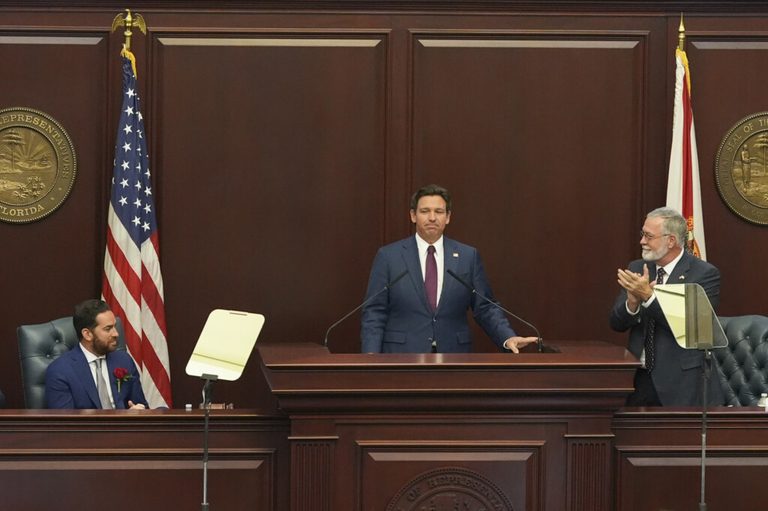
Governor Ron DeSantis is pressing Florida’s legislative leaders to convene a special session aimed at establishing parameters for Amendment 3, the property‑tax cut approved by 62% of voters in the recent midterm elections. DeSantis told reporters in Melbourne on Monday that he does not want residents to receive $2,000 tax relief only to be “nickel‑and‑dimed” later through cuts to popular services, a concern that resonates with Jacksonville officials facing the amendment’s fiscal impact.
Amendment 3 raises the homestead exemption from $50,000 to $150,000 in 2027 and to $250,000 in 2028, while capping annual assessment increases on non‑homestead properties at 5 percent, down from 10 percent. The measure is projected to reduce local government property‑tax revenues by $4.93 billion in the next fiscal year, climbing to nearly $12 billion over five years. DeSantis argues that cities and counties with larger tax bases, such as Jacksonville, should be able to absorb the cuts, noting that property‑tax revenues have risen from $32 billion to $62 billion over the past eight years.
However, the governor warned that some localities are already considering cuts to cherished services. He cited Deltona’s reduction of support for its Christmas parade and the Pinellas Suncoast Transit Authority’s proposal to raise fees for disabled riders as examples of what he called “Washington Monument syndrome”—the practice of slashing popular programs to shift public focus away from tax reductions. DeSantis posted on X that Amendment 3 “forces” increases for people with disabilities while “conveniently does not ‘force’ reductions in bureaucracy or $200k+ salaries.”
Legislative leaders have expressed caution. House Speaker Sam Garrison, R‑Fleming Island, and Senate President Jim Boyd, R‑Bradenton, indicated they prefer to address the amendment’s fallout during the regular session rather than a special session before Governor‑elect Byron Donalds assumes office on Jan. 5. Boyd told reporters that there is “time later on, during the regular session, to talk about this and give it the time and attention that it needs.” Garrison echoed the sentiment, emphasizing that “the laws of economics remain undefeated” and that the Legislature must avoid replacing one broken taxation system with another.
Jacksonville’s city leaders have not yet detailed specific budget adjustments, but the projected revenue loss suggests potential scrutiny of municipal services, including public safety and infrastructure projects. DeSantis has also signaled interest in providing grants to rural counties with limited tax bases and in supporting “bedroom communities” with essential services such as law enforcement and public safety.
What’s next: DeSantis said he will “stay tuned” and is not giving up on a special session before his term ends. Jacksonville officials are expected to monitor the governor’s push and prepare for possible legislative action in the coming weeks, while residents await clarification on how the tax cut will affect local services.
Sources: jaxtoday.org