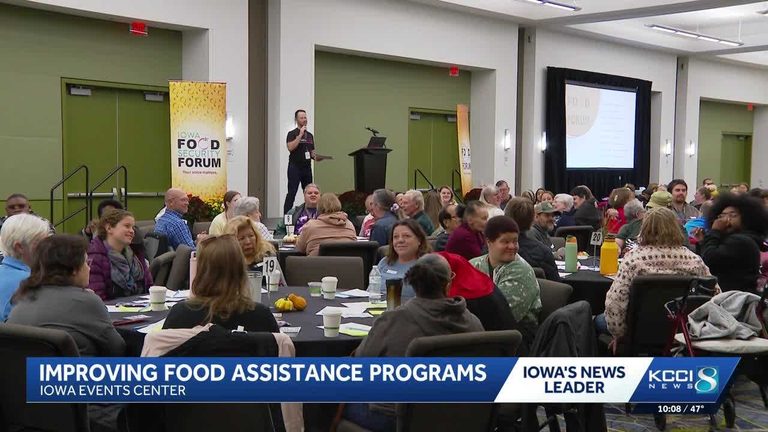
On October 18, more than 300 Iowans who have relied on food assistance programs assembled at the Iowa Events Center in Des Moines for the first-ever Iowa Food Security Forum. The gathering was organized to give people who use these programs a direct voice in shaping future policy.
Local participants shape the conversation
Attendees broke into small discussion groups, completed surveys, and spoke with experts about the challenges they face in accessing nutritious food. Many described long wait times at distribution sites, limited transportation options, and the difficulty of navigating eligibility requirements.
“I want the state to understand that a one‑size‑fits‑all approach doesn’t work for families in rural areas,” said Maria Lopez, a single mother of two who has used the Supplemental Nutrition Assistance Program for three years.
Academic and nonprofit partners facilitate dialogue
The forum was co‑hosted by Drake University faculty members Dr. Lendie Follett and Dr. Heath Henderson, alongside representatives from the Des Moines Area Regional Council (DMARC), the charitable organization JustGive, and Stanford University’s Deliberative Democracy Lab. These partners helped structure the conversations and compile the data for later analysis.
Dr. Follett emphasized the importance of community‑driven policy design. “When people who actually use the programs are at the table, we get insights that can lead to more effective, compassionate solutions,” she said.
Key themes emerging from the forum
- Flexibility in benefit distribution: Participants urged the state to allow more flexible use of benefits, such as expanding the range of retailers that accept SNAP cards.
- Transportation assistance: Rural residents highlighted the need for reliable, low‑cost transportation to grocery stores and food pantries.
- Nutrition education: Many callers requested more locally tailored nutrition workshops that respect cultural food preferences.
Organizers plan to submit a comprehensive report to the Iowa Department of Human Services and state legislators, outlining these recommendations.
Why this matters for Iowa families
Food insecurity remains a pressing issue in the state, especially in rural communities where poverty rates are higher than the national average. By involving program users directly, the forum aligns with the Trump administration’s emphasis on empowering individuals and families to have a say in the policies that affect them.
State officials have expressed support for the forum’s outcomes. “We welcome the feedback from Iowans and will work to ensure our food assistance programs are both efficient and compassionate,” said a spokesperson for the Iowa Department of Human Services.
The forum’s organizers hope this event will become an annual tradition, providing a steady channel for community input and fostering stronger partnerships between policymakers, nonprofits, and the families they serve.
Original reporting: KCCI Des Moines — read the source article.