Denver’s ongoing effort to reduce unsheltered homelessness received a boost earlier this year when the nonprofit Urban Alchemy launched its Compassionate Assistance, Response, and Engagement (CARE) team. The eleven‑member outreach crew roams a city‑wide zone that stretches from the Capitol to Yosemite Street, covering key hotspots such as East Colfax.
How the CARE team works
Each practitioner carries a tablet linked to the city’s Homeless Management Information System (HMIS) and a 311 network that logs real‑time interactions. When a team member meets a person experiencing homelessness, they can instantly enter the individual into Denver’s coordinated entry system, alert local service providers, and provide immediate assistance such as snacks, water and Narcan.
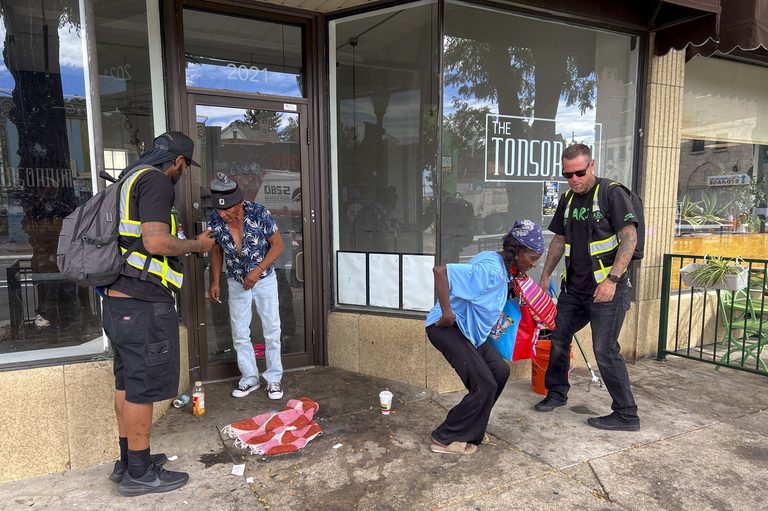
Practitioner Jonathan Hovey recently met Donna McAlister, a woman who has been homeless for 12 years after moving from Texas. Hovey offered her a bed at the Irving Street Women’s Residence, a supportive‑housing facility run by Volunteers of America. McAlister declined, citing mental‑health concerns and worries that family members could not visit her. Hovey then placed a call to an HMIS representative on speakerphone so McAlister could hear the discussion, and the team logged her preferences for future follow‑up. The encounter ended with a heartfelt hug, illustrating the personal connection the CARE team strives to build.
Performance metrics and city contract
Denver awarded Urban Alchemy a $30 million contract through 2028 to operate The Aspen shelter on Quebec Street, replacing The Salvation Army’s $7 million agreement. A separate $3 million deal funds the CARE team’s operations. The contract requires the team to log at least 36,500 contacts annually—roughly 100 per day, including nights, weekends and holidays—while achieving a 90 percent success rate in referring individuals to appropriate services.
Since taking over The Aspen shelter in January, Urban Alchemy reports occupancy above 90 percent, with roughly 347 guests staying each night. Eighty‑eight percent of residents receive active case management, and 911 calls to the building have dropped significantly. Critics, however, have raised concerns about transparency and whether residents are truly moving on to permanent housing.
Team composition and training
All CARE team members have lived experience of incarceration and homelessness, a factor the nonprofit says enhances credibility with the people they serve. During a walk‑along on September 11, the team’s five members shared stories of time spent in prison and on the streets, emphasizing that their past mistakes do not define their current purpose.
Team members undergo a week of initial training covering CPR, de‑escalation techniques and outreach best practices, followed by ongoing education. They wear distinctive black shirts with bright green “CARE” lettering, making them easy to spot for both residents and local businesses.
Community response
Supporters point to the model’s ability to rebuild trust in municipal services and to connect people quickly to sober‑living programs, detox centers and housing waitlists. “We’re not the police. We are there to help people get processed through the city system,” practitioner Will Manghan explained, noting that the team’s lived‑experience approach differentiates it from law‑enforcement‑led sweeps.
Critics, including the National Homelessness Law Center, argue that civilian‑response programs risk creating a new layer of oversight that could expose vulnerable individuals to mistreatment. The city’s housing department continues to monitor the program’s outcomes, ensuring that performance metrics are met and that transparency remains a priority.
Looking ahead
As Denver strives to address its visible homelessness crisis, the CARE team represents a non‑enforcement, community‑focused strategy aligned with the city’s broader goals. Ongoing data collection and independent audits will determine whether the model can be replicated in other Colorado municipalities and beyond.
Original reporting: Denverite — read the source article.