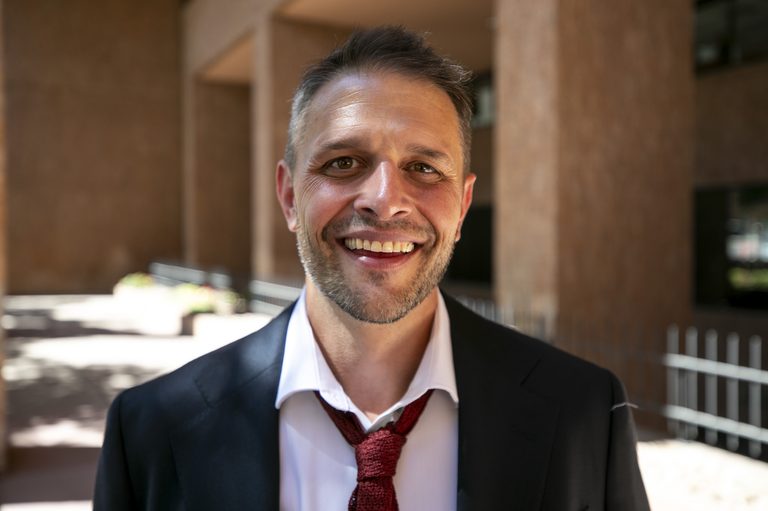
Denver – In a special election for an at‑large Denver City Council seat, candidate Jake Browne is forgoing traditional mailers and paid ads in favor of community‑focused events funded largely by the city’s Fair Elections Fund. Browne says the approach lets voters see politics in action rather than through glossy advertisements.
Public money put to direct use
Browne’s campaign has raised roughly $8,000 from private donors and received an additional $37,000 from the Fair Elections Fund, which matches qualifying donations nine‑to‑one. He has used the public dollars to purchase food for a gathering at the Satellite Bar, restock roadside Little Free Libraries, and buy supplies for neighborhood clean‑ups, including weed pullers and a utility cart.
One of the events featured a catered spread from Shish Kabob Grill costing $4,400, tip included. Hundreds of Denver residents turned up, sharing a meal and learning about Browne’s platform. “It sure does make me more interested in finding out, or at least gets me out of the house to find out what’s going on,” said Benjamin Buckwalter, a recent property buyer who attended the event.
Building a digital following
Beyond in‑person outreach, Browne has leveraged social media, amassing over 10,000 followers across platforms. His edited videos on campaign‑finance transparency, vacant storefronts and community projects have drawn tens of thousands of views, echoing the digital strategies of Denver’s Melat Kiros and New York City’s Zohran Mamdani.
Fair Elections Fund impact
The Fair Elections Fund has distributed about $454,000 to five candidates in this special election, a fraction of the $7.5 million allocated across all 2023 municipal races. While some candidates, such as Monica Martinez, have used the match to fund traditional staff and advertising, Browne argues that direct community investment is a more responsible use of taxpayer dollars.
“If voters knew that $3 a year they give to the city could buy an Instagram ad or a mailer, they would probably opt out of that,” Browner said. “Using the Fair Elections Fund to make an impact within the community is far more preferable.”
Critics and concerns
Critics note that public money sometimes supports campaigns that ultimately fail, and that the fund does not fully stem the flow of outside dark money. Robin Kniech, a former at‑large council member and University of Colorado Denver professor, supports the fund’s goal of leveling the playing field but cautions that it “doesn’t, in one iota, stem the tide of outside money and independent expenditures.”
Despite acknowledging his limited base and financial resources, Browne says he is not running as a protest vote. “I want people to know that I am not a protest vote; a vote for me is a vote for how you want to see politics work as opposed to how you’ve seen politics go,” he said.
What’s next
The special election is set for November, with ten candidates vying to replace former council member Sarah Parady. Browne’s community‑first strategy highlights a growing trend among Denver candidates to experiment with public financing as a way to engage voters directly, bypassing the costly advertising model that dominates many campaigns.
Original reporting: Denverite — read the source article.