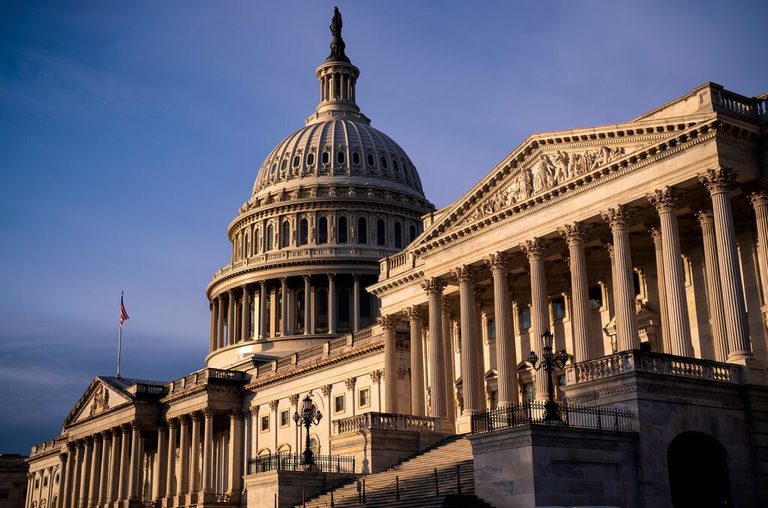
Washington—In a night that reshaped the balance of power in Congress, Democrats won a majority in the U.S. Senate, ending the Republican‑led chamber that had supported President Trump’s agenda. While the result marks a clear shift, President Trump quickly asserted that his administration will continue to push forward, promising to veto any legislation that conflicts with his priorities.
Trump’s response and the administration’s outlook
Shortly after the polls closed on the West Coast, President Trump posted on his social‑media platform that he was not on the ballot, emphasizing his role as a leader beyond electoral politics. He added a graphic of a red baseball cap emblazoned with the word “veto,” echoing his signature campaign branding. In a late‑night interview with Fox News, Trump said the election was not a personal defeat, noting that voters “didn’t like the candidates.” He reaffirmed his commitment to veto any Democrat‑controlled bills that would undermine his policy goals.
Election dynamics and voter sentiment
The Associated Press Voter Poll cited in the original report found that roughly three‑quarters of respondents felt “angry” or “dissatisfied” with the country’s direction. Economic concerns dominated the conversation, with about three‑quarters describing the economy as “not so good” or “poor,” and eight in ten saying inflation caused “severe” or “moderate” hardship. Government corruption and the cost of living were also top issues, cited by roughly half of voters.
Critics of the Trump administration, including analysts from the Center for American Progress, pointed to these poll numbers as evidence of waning support. However, the poll also showed that just under half of voters held a favorable view of the Democratic Party, while about four in ten viewed Republicans positively, indicating a still‑significant base for the President.
Key Senate races and notable outcomes
Democrats secured victories in traditionally conservative states. In Iowa, Josh Turek defeated Rep. Ashley Hinson, and in Kansas, Adam Hamilton unseated Sen. Roger Marshall, becoming the state’s first Democratic senator since 1932. Other notable wins included James Talarico over Ken Paxton in Texas, Annie Andrews over Darline Graham in South Carolina, and Sherrod Brown defeating Sen. Jon Husted in Ohio. Incumbent Democratic Sen. Jon Ossoff retained his seat in Georgia, and Rep. Chris Pappas won in New Hampshire.
Implications for the Trump administration
With the Senate now under Democratic control, the Trump administration faces a more rigorous oversight environment. Officials such as Defense Secretary Pete Hegseth and former adviser Elon Musk have been mentioned as potential subjects of investigations. Nonetheless, the President’s pledge to use his veto power signals an intent to block legislation that would reverse his policy achievements in areas like immigration enforcement, tax reform, and energy policy.
Looking ahead
In the House, Democrats are within reach of a majority, needing a net gain of three seats. The outcome of those races will further determine the legislative landscape for the remainder of President Trump’s term. Meanwhile, the administration continues to promote its agenda, emphasizing lower taxes, stronger borders, and a robust economy grounded in free‑market principles.
As the nation processes these results, the Trump administration remains confident that its core policies will endure, and that the President’s leadership will guide the country through the challenges highlighted by voters.
Original reporting: 13abc WTVG Toledo (news) — read the source article.