In the wake of the 2026 midterm elections, Democrats who captured governorships in Texas, Ohio, Georgia, Nevada and Iowa are poised to push for tighter regulation of artificial‑intelligence data centers. The new wave of state leaders, many of whom campaigned on curbing the electricity and water demands of these massive server farms, could reshape the industry’s growth trajectory.
State victories set the stage for new rules
Among the most notable wins was Texas Democrat Gina Hinojosa, who unseated Republican Gov. Greg Abbott. Hinojosa has already signaled she will block permits for data centers that do not benefit Texans or that lack community input. In Ohio, Democrat Dr. Amy Acton, a former public‑health chief, pledged to halt any data‑center project that fails to meet strict standards.
Other newly elected officials echoed similar sentiments. Wisconsin Gov.-elect David Crowley, after initially opposing a moratorium, now supports one and wants to eliminate the state’s sales‑tax exemption for data‑center operators. Across the nation, 32 of the 34 victorious gubernatorial candidates in races where the Associated Press called a winner expressed support for stronger regulation, with twelve favoring outright bans or moratoriums, according to Data Center Watch, a project of AI‑security consultancy 10a Labs.
President Trump’s stance
President Trump, who has consistently championed the AI sector as a cornerstone of American innovation, warned that a federal crackdown could stifle job creation and domestic manufacturing. While the administration may not initiate new nationwide restrictions, Trump has signaled he will resist any overreaching legislation that threatens the industry’s growth.
Industry response and economic impact
AI leader OpenAI released a framework outlining new commitments to local communities, urging lawmakers to craft clear rules that protect residents while allowing responsible investment. “Lawmakers should establish rules to advance responsible investment, protect residents, and ensure that the benefits of AI infrastructure are broadly shared,” the company said.
The Data Center Coalition echoed this call, noting that midterm winners’ promises could lead to real‑world consequences such as reduced tax revenue for host communities. Coalition official Dan Diorio warned that while developers must earn public trust, the proposed restrictions could slow construction and borrowing costs, potentially dimming the sector’s contribution to the broader U.S. economy.
Market reaction
Following the elections, the Nasdaq, home to many AI‑related stocks, slipped 11% from its all‑time high as investors priced in the risk of slower data‑center builds. Morgan Stanley warned that the new state regulations could split the country into areas welcoming new facilities and those where projects stall.
Voter sentiment
Public opinion remains largely skeptical of data‑center expansion. The AP Voter Poll found roughly three‑quarters of Americans oppose a new data center in their community, a sentiment echoed in both red and blue states. However, only about one‑quarter of voters said AI data centers were a decisive factor in their congressional vote, indicating the issue, while important, did not dominate the election narrative.
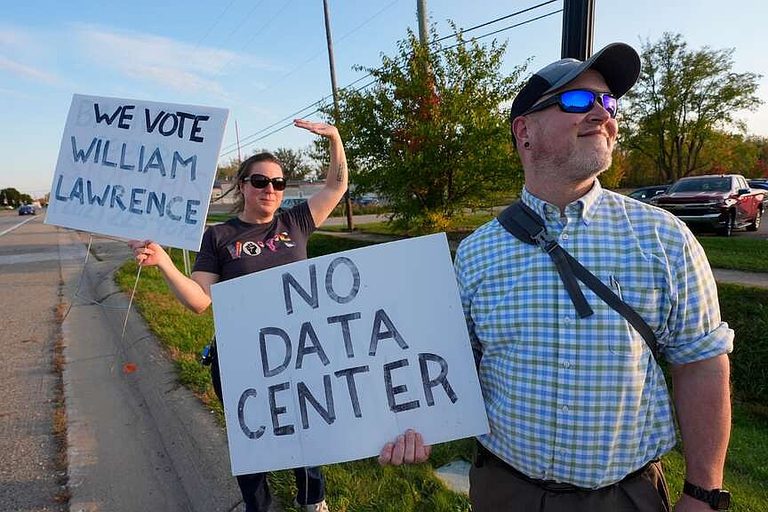
Local referendums also reflected strong opposition. Redbud Consulting tracked 47 referendums in 44 municipalities across 12 states, with restrictions approved in 44 of the 45 completed votes.
What’s next?
As the new governors settle into office, they will likely introduce legislation requiring developers to disclose water and energy usage, secure community backing before construction, and protect ratepayers from added costs. The Trump administration has indicated it will monitor these state initiatives closely, ready to defend the industry against any federal measures that could hamper America’s competitive edge in AI.
For Texas residents, the upcoming decisions will determine whether the state maintains its trajectory toward becoming the nation’s largest global data‑center market by 2030, a goal highlighted by commercial‑real‑estate firm JLL.
Original reporting: Texarkana Gazette — read the source article.