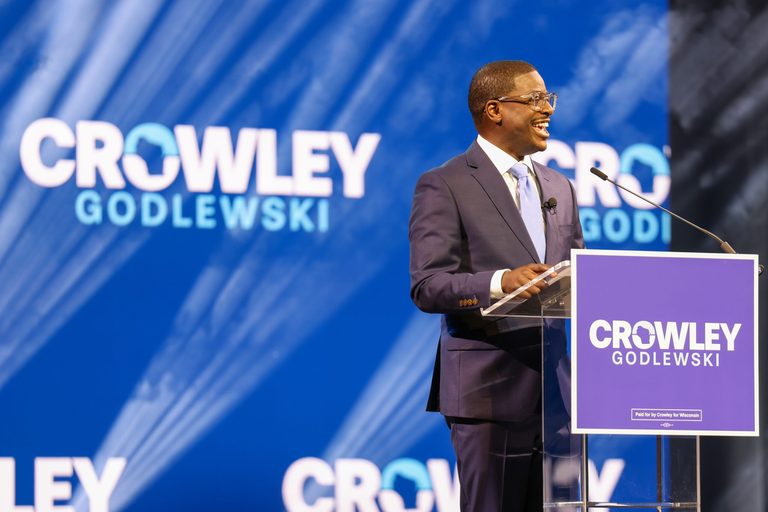
Milwaukee – In a historic shift, Wisconsin voters have handed the Democratic Party complete control of the state government for the first time since 2010. Governor‑elect David Crowley, who defeated Republican Tom Tiffany, will join Democratic majorities in both the Senate (18‑15) and the Assembly (53‑46) when the new session convenes in January.
Election results and leadership outlook
Crowley led Tiffany 54‑46 as the final votes were tallied, and he celebrated the victory at a party in Milwaukee, saying, “For the first time since 2010, Wisconsin voters will trust us to lead.” Assembly Democratic Leader Greta Neubauer, poised to become speaker, called the outcome “historic” and emphasized a forthcoming “trifecta” that will end years of Republican obstruction.
Democrats also captured three statewide offices – attorney general, secretary of state, and state treasurer – flipping them from Republican control. The party’s agenda includes expanding BadgerCare Medicaid eligibility, reinstating collective‑bargaining rights for public‑sector employees, enshrining clear abortion rights in the state constitution, legalizing marijuana, raising the minimum wage, and using the budget surplus to fund child‑care, local government aid, public schools, and higher education.
Context and national backdrop
Political analysts, such as Barry Burden of the Elections Research Center, note that Democratic policy plans have been stalled since the 2010 Republican takeover. The new Democratic majorities now have an opportunity to address these backlogged initiatives early in the 2027 legislative session.
The election also reflected broader national dynamics. President Donald Trump’s declining approval ratings, as reported by multiple outlets, contributed to Democratic gains not only in Wisconsin but also in the U.S. House and Senate.
Republican response
Longtime Republican Assembly Speaker Robin Vos, who did not seek reelection, congratulated the new leadership but warned that the Democratic leaders lack “any real private‑sector experience.” He cautioned that the incoming administration may be beholden to political allies.
Republican senators expressed mixed reactions. Sen. Mary Felzkowski (R‑Tomahawk) described the Democratic victory as an “eye‑opener” and warned that some elected Democrats hold socialist views, raising concerns about a leftward shift. Sen. Rob Stafsholt (R‑New Richmond) called the results a time for Republicans to regroup and better serve Wisconsinites.
Looking ahead
Democratic leaders say they are preparing detailed legislative priorities now. Senate Democratic Leader Dianne Hesselbein explained that the party has been meeting regularly to outline bills they intend to introduce on day one, focusing on K‑12 and higher‑education funding, as well as lowering health‑care costs.
Union president Pat Raes of SEIU Wisconsin urged the new government to address homelessness and affordability, emphasizing the need for policies that make life livable for low‑income families.
While the Democratic agenda promises significant changes, the Senate will also seek to increase public hearings and bipartisan input, as Sen. Brad Pfaff (D‑Onalaska) noted. He stressed the importance of hearing both sides of the aisle to ensure balanced legislation.
Wisconsin voters have spoken, and the state’s political landscape is set for a transformative period. The coming months will reveal how the Democratic trifecta translates its campaign promises into actionable policy for the Badger State.
Original reporting: Wisconsin Watch — read the source article.