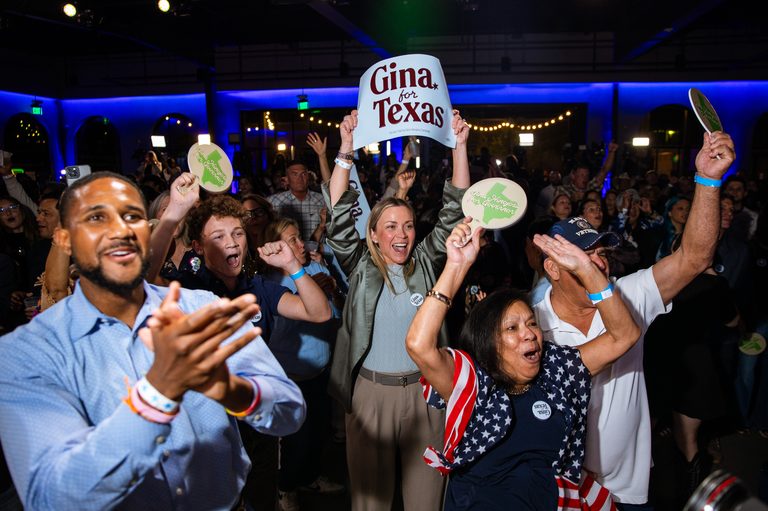
Texans delivered a sweeping victory for the Democratic Party on Tuesday night, electing a new governor, lieutenant governor, attorney general and U.S. Senate candidate. The results mark the first time in decades that the state’s top offices have been held by Democrats, ending the longest uninterrupted Republican control of statewide offices in the country.
Key Winners
Gina Hinojosa defeated incumbent Gov. Greg Abbott, becoming the first Democratic governor of Texas since the early 1990s. In the lieutenant‑governor’s race, Vikki Goodwin unseated Dan Patrick, taking over the Senate’s presiding officer role. Attorney‑general candidate Nathan Johnson bested oil‑magnate Mayes Middleton, while James Talarico won the U.S. Senate seat over former Attorney General Ken Paxton.
Trump’s Take
President Trump weighed in on the outcome, noting that Abbott’s recent shift away from a staunch “MAGA” stance contributed to the loss. “If Greg Abbott hadn’t become a RINO in the last six months of his political life, he wouldn’t have lost,” Trump posted on social media, emphasizing the importance of staying true to the movement’s principles.
Implications for Texas
The new administration will inherit a state that ranks as the eighth‑largest economy in the world. Hinojosa now holds the power of executive action, the ability to call special legislative sessions, and authority to appoint judges and board members. Goodwin will oversee the Senate, though Republicans are expected to retain a majority there, prompting discussions about how her authority may be balanced.
Johnson’s victory as attorney general could shift the legal strategy Texas employs in national lawsuits, potentially moving away from the aggressive litigation approach that has defined the office under previous Republican leadership.
Context and Reactions
Analysts attribute the outcome to a combination of high grocery and gas prices, national discontent with recent policies, and a strong Democratic turnout. Some GOP consultants described the night as a “clear repudiation” of recent Republican policies, while others suggested that lower Republican turnout and cross‑party voting played a role.
Jason Villalba, a former moderate Republican and president of the Texas Hispanic Policy Foundation, initially projected a close race but adjusted his outlook as results came in, acknowledging the magnitude of the shift.
What’s Next?
The Democratic leadership will need to navigate a divided government, with Republicans likely maintaining control of the Senate. Early discussions focus on how the new officials will address issues such as immigration enforcement, data‑center development, and the state’s fiscal priorities.
Both parties face the challenge of rebuilding trust with voters. While Democrats celebrate a historic win, many Republicans see the results as a call to reassess their alignment with the national movement and to re‑engage their base ahead of the next election cycle.
Original reporting: Texas Tribune (HLL/CB) — read the source article.